
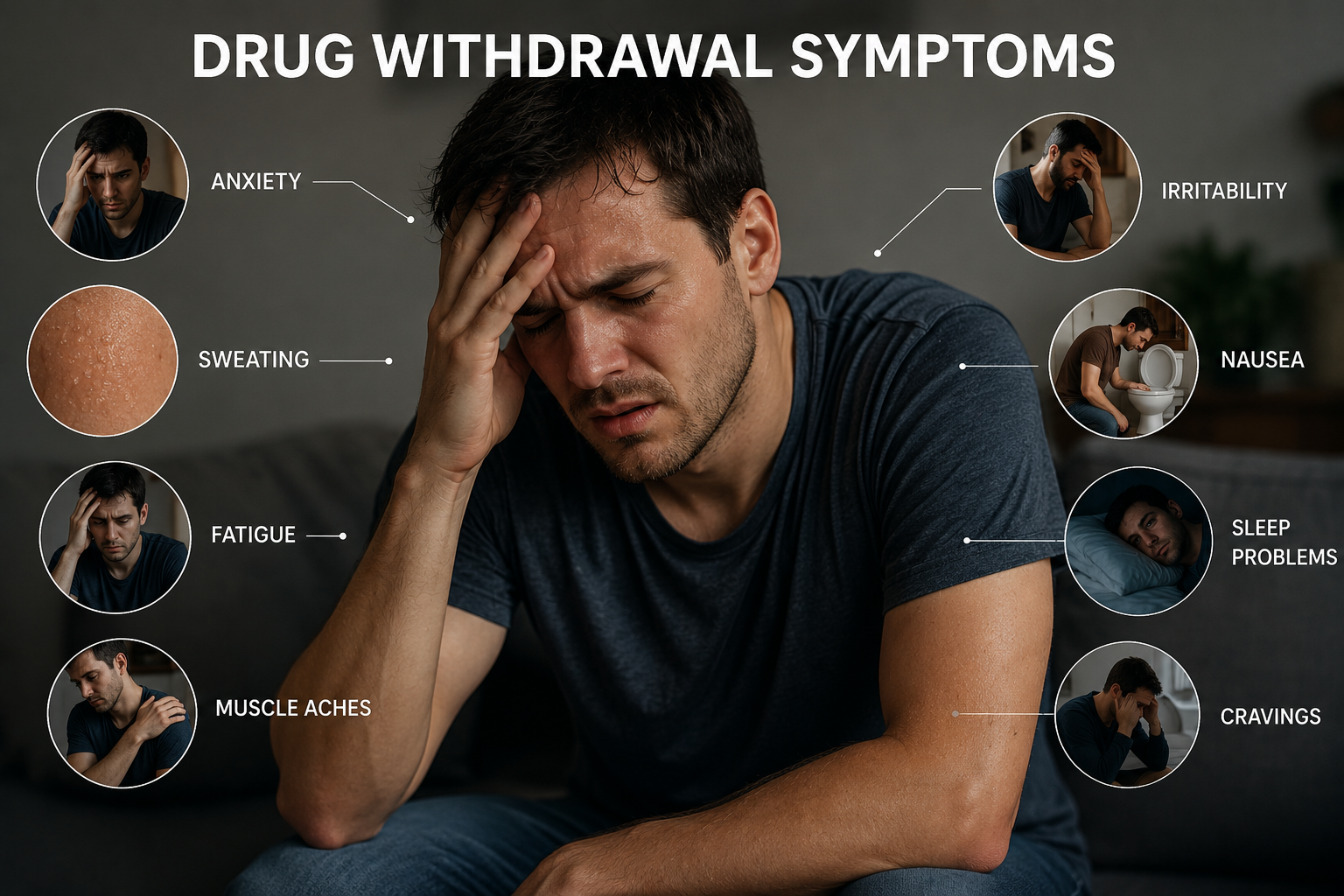
Drug withdrawal (नशीली दवा छोड़ने के लक्षण), drug withdrawal syndrome, or substance withdrawal syndrome is a group of symptoms that occur upon the abrupt discontinuation or decrease in the intake of pharmaceutical or recreational drugs. For the symptoms of withdrawal to occur, one must have first developed a form of drug dependence. This may occur as physical dependence, psychological dependence, or both. Drug dependence develops from consuming one or more substances over a period of time.
The symptoms from withdrawal may be even more dramatic when the drug has masked prolonged malnutrition, disease, chronic pain, infections (common in intravenous drug use), or sleep deprivation, conditions that drug abusers often develop as a secondary consequence of the drug. When the drug is removed, these conditions may resurface and be confused with withdrawal symptoms. Genes that encode for the alpha5 nicotinic acetylcholine receptor affect nicotine and alcohol withdrawal symptoms.
What Is Drug Withdrawal?
Drug withdrawal refers to a group of physical, mental, and emotional symptoms that appear after reducing or stopping the use of an addictive substance.
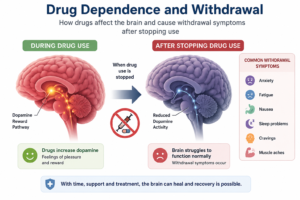
Many drugs affect the brain’s reward system by altering neurotransmitters such as dopamine and serotonin. With repeated use, the brain adjusts to the drug’s presence. When the substance is removed, the body needs time to restore its natural balance. This adjustment period is known as withdrawal.
Withdrawal does not mean a person lacks willpower. It is a biological response caused by changes in brain chemistry and body functioning.
Why Does Drug Withdrawal Happen?
Drug withdrawal occurs because prolonged substance use changes the way the brain and nervous system function.
When someone repeatedly consumes an addictive substance:
- The brain becomes accustomed to artificial stimulation.
- Natural chemical production may decrease.
- The body develops tolerance, requiring more of the substance to achieve the same effect.
- The nervous system adapts to the drug’s presence.
When the drug is suddenly removed, the brain temporarily struggles to regulate mood, stress, sleep, and physical functions.
This imbalance creates withdrawal symptoms.
Common Causes of Drug Withdrawal
Drug withdrawal can occur due to stopping or reducing many types of substances, including:
1. Opioid Withdrawal
Opioids include prescription pain medications and illegal substances that affect pain control and pleasure centers in the brain.
Examples include:
- Morphine
- Heroin
- Codeine
- Oxycodone
Common opioid withdrawal symptoms include:
- Muscle aches
- Sweating
- Runny nose
- Restlessness
- Insomnia
- Anxiety
- Nausea and vomiting
Although opioid withdrawal is usually not life-threatening, it can be extremely uncomfortable and often requires medical support.
2. Alcohol Withdrawal
Alcohol withdrawal can become medically dangerous, especially in people who have consumed large amounts for a long time.
Symptoms may include:
- Tremors
- Anxiety
- Irritability
- Sweating
- Increased heart rate
- Confusion
- Seizures in severe cases
Severe alcohol withdrawal may lead to a condition called delirium tremens, which requires urgent medical care.
3. Stimulant Withdrawal
Stimulants increase activity in the brain and nervous system.
Examples include:
- Cocaine
- Methamphetamine
- Certain prescription stimulants
Withdrawal symptoms may include:
- Extreme tiredness
- Depression
- Increased appetite
- Sleep problems
- Strong cravings
4. Benzodiazepine Withdrawal
Benzodiazepines are medications commonly prescribed for anxiety, insomnia, and seizures.
Examples include:
- Diazepam
- Alprazolam
- Lorazepam
Stopping these medicines suddenly can cause serious withdrawal symptoms, such as:
- Severe anxiety
- Panic attacks
- Insomnia
- Irritability
- Seizures
Medical supervision is strongly recommended when discontinuing benzodiazepines.
Drug Withdrawal Symptoms
Withdrawal symptoms vary depending on the substance, but common signs include:
Physical Symptoms
- Sweating
- Shaking or trembling
- Muscle pain
- Headache
- Nausea
- Vomiting
- Fatigue
- Changes in appetite
- Increased heart rate
Psychological Symptoms
- Anxiety
- Depression
- Mood swings
- Irritability
- Difficulty concentrating
- Strong drug cravings
- Restlessness
Behavioral Symptoms
- Seeking the drug again
- Social withdrawal
- Difficulty managing daily activities
- Changes in sleeping patterns
Stages of Drug Withdrawal
Drug withdrawal generally happens in several stages.
Stage 1: Early Withdrawal
This stage begins shortly after the last dose.
Symptoms may include:
- Anxiety
- Cravings
- Restlessness
- Mood changes
- Sleep difficulties
The timing depends on the substance involved.
Stage 2: Peak Withdrawal
Symptoms often become strongest during this phase.
A person may experience:
- Intense cravings
- Emotional distress
- Physical discomfort
- Depression
- Irritability
Medical support can help reduce complications during this period.
Stage 3: Recovery and Stabilization
During this stage, the body slowly begins returning to normal functioning.
Some people may continue experiencing:
- Occasional cravings
- Sleep problems
- Emotional challenges
Long-term recovery programs help manage these difficulties.
How Long Does Drug Withdrawal Last?
The duration of drug withdrawal depends on:
- Type of substance
- Amount used
- Length of addiction
- Individual health condition
- Treatment approach
Approximate timelines:
Opioids: Symptoms may begin within hours and improve over several days to weeks.
Alcohol: Symptoms may start within hours and peak within a few days.
Stimulants: Fatigue and mood changes may last days to weeks.
Benzodiazepines: Withdrawal may last weeks or longer and should be medically supervised.
Every person experiences withdrawal differently.
Factors That Affect Withdrawal Severity
Several factors influence how intense withdrawal symptoms become:
Duration of Drug Use
Long-term substance use usually creates stronger physical dependence.
Dosage
Higher doses often lead to more severe withdrawal symptoms.
Multiple Substances
Using multiple drugs together can increase withdrawal risks.
Physical and Mental Health
Existing health conditions may affect recovery.
Support System
Family support, counseling, and medical care improve recovery outcomes.
Drug Withdrawal Treatment: Medical Detox, Recovery Methods, Prevention, and Long-Term Healing
Treatment
Drug withdrawal treatment focuses on helping the body safely adjust after stopping substance use while reducing uncomfortable symptoms and preventing complications.
The best treatment approach depends on:
- Type of drug involved
- Severity of dependence
- Duration of substance use
- Physical and mental health conditions
- Risk of dangerous withdrawal symptoms
A medically supervised recovery plan provides the safest path toward overcoming dependence.
Medical Detoxification for Drug Withdrawal
Medical detoxification (detox) is the process of removing harmful substances from the body under professional supervision.
During detox, healthcare professionals monitor:
- Heart rate
- Blood pressure
- Mental health symptoms
- Hydration levels
- Withdrawal severity
The main goals of detox are:
- Keeping the person safe
- Managing symptoms
- Reducing cravings
- Preparing for long-term recovery
Detox alone does not cure addiction, but it is an important first step toward complete treatment.

Medications Used During Drug Withdrawal Treatment
Doctors may prescribe medications to reduce withdrawal symptoms and support recovery.
Medicines for Opioid Withdrawal
Some medications can help manage opioid dependence by reducing cravings and withdrawal discomfort.
They may include:
- Medicines that stabilize brain activity
- Medications that reduce withdrawal symptoms
- Supportive treatments for pain, nausea, and sleep problems
A qualified healthcare professional should always guide treatment.
Medicines for Alcohol Withdrawal
Medical treatment may include medications that help:
- Control anxiety
- Prevent seizures
- Reduce severe withdrawal complications
People with heavy alcohol dependence should avoid suddenly stopping without medical advice.
Medicines for Anxiety or Sleep-Related Withdrawal Problems
Doctors may recommend safer treatment options for temporary symptoms such as:
- Anxiety
- Insomnia
- Restlessness
Self-medication during withdrawal can be risky.
Behavioral Therapy and Counseling
Recovery from drug withdrawal involves more than treating physical symptoms. Counseling helps address the psychological causes behind addiction.
Common therapies include:
Cognitive Behavioral Therapy (CBT)
CBT helps individuals:
- Identify harmful thought patterns
- Manage triggers
- Develop healthier coping strategies
Supportive Counseling
Counseling provides emotional support and helps people rebuild confidence during recovery.
Group Therapy
Sharing experiences with others facing similar challenges can reduce isolation and encourage long-term recovery.
Lifestyle Changes That Support Recovery
Healthy daily habits can improve physical and emotional healing.
1. Balanced Nutrition
A nutritious diet helps repair the body after prolonged substance use.
Include:
- Fruits and vegetables
- Protein-rich foods
- Whole grains
- Adequate fluids
2. Regular Exercise
Physical activity may help improve:
- Mood
- Sleep quality
- Energy levels
- Stress management
3. Proper Sleep Routine
Withdrawal can disturb sleep patterns.
Helpful habits include:
- Maintaining a regular bedtime
- Avoiding excessive screen time
- Creating a calm sleeping environment
4. Stress Management
Stress is a common trigger for relapse.
Helpful techniques include:
- Meditation
- Deep breathing exercises
- Yoga
- Relaxation practices
How to Manage Drug Withdrawal Symptoms at Home
Mild symptoms may sometimes be managed with supportive care, but severe withdrawal requires professional help.
Helpful steps include:
- Staying hydrated
- Eating regular meals
- Resting adequately
- Avoiding triggers
- Seeking emotional support
Never attempt to stop certain substances suddenly without medical guidance, especially alcohol or benzodiazepines.
Risks and Complications of Drug Withdrawal
Although many people recover successfully, withdrawal can involve risks.
Possible complications include:
- Severe dehydration
- Dangerous changes in blood pressure
- Seizures
- Severe depression
- Increased risk of relapse
- Mental health crises
Immediate medical attention is needed if someone experiences:
- Confusion
- Seizures
- Chest pain
- Difficulty breathing
- Thoughts of self-harm
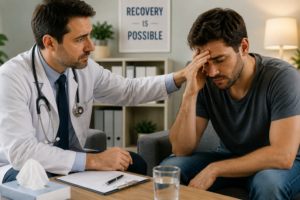
Preventing Drug Relapse After Withdrawal
Withdrawal is only the beginning of recovery. Preventing relapse requires ongoing support.
Effective strategies include:
Build a Strong Support Network
Support from:
- Family
- Friends
- Counselors
- Recovery groups
can make recovery easier.
Identify Triggers
Common relapse triggers include:
- Stress
- Certain environments
- Negative emotions
- Contact with people associated with drug use
Recognizing triggers helps create healthier responses.
Continue Treatment
Long-term recovery may include:
- Counseling
- Follow-up medical care
- Support groups
- Lifestyle improvements
Recovery is a continuous process.
Role of Family Support During Drug Withdrawal
Family members can play an important role by:
- Offering encouragement
- Avoiding judgment
- Supporting treatment plans
- Creating a safe environment
Addiction affects both individuals and families, so education and communication are important.
Drug Withdrawal and Mental Health
Drug withdrawal often affects emotional well-being.
Some people experience:
- Depression
- Anxiety
- Mood changes
- Difficulty controlling emotions
Mental health support is an important part of recovery because addiction and emotional health are closely connected.
When Should You Seek Emergency Help?
Emergency medical help is needed if withdrawal causes:
- Seizures
- Severe confusion
- Hallucinations
- Loss of consciousness
- Extreme agitation
- Suicidal thoughts
Professional support can prevent serious complications.
Conclusion
Drug withdrawal is a complex process that affects the body, brain, and emotional well-being of a person who stops using an addictive substance. Although withdrawal symptoms can be uncomfortable and sometimes serious, understanding the causes, warning signs, and treatment options can help individuals seek timely support and begin their recovery journey safely. Medical supervision, proper detoxification, and professional guidance play an important role in reducing risks and managing symptoms effectively.
Recovery from drug dependence is possible with the right combination of medical care, counseling, lifestyle changes, and ongoing support. Withdrawal is only the first step toward healing, and long-term success depends on building healthy habits, managing triggers, and maintaining a strong support system. With patience, treatment, and encouragement, individuals can regain control of their lives and move toward a healthier future.
Frequently Asked Questions (FAQs)
1. What is drug withdrawal?
Drug withdrawal is a group of physical and psychological symptoms that occur when a person reduces or stops using an addictive substance after the body has become dependent on it.
2. How long does drug withdrawal last?
The duration varies depending on the drug type, level of dependence, and individual health. Some symptoms improve within days, while others may continue for weeks.
3. Is drug withdrawal dangerous?
Some forms of withdrawal can be dangerous, especially alcohol and benzodiazepine withdrawal. Medical supervision is recommended for high-risk cases.
4. Can drug withdrawal be treated?
Yes. Treatment includes medical detox, medications, counseling, behavioral therapy, and long-term recovery support.
5. What are the first signs of drug withdrawal?
Early signs may include anxiety, cravings, sweating, restlessness, sleep problems, and mood changes.
6. Can a person recover completely after drug withdrawal?
Yes. Many people achieve long-term recovery with proper treatment, support, and healthy lifestyle changes.
Reference: https://en.wikipedia.org/wiki/Drug_withdrawal