
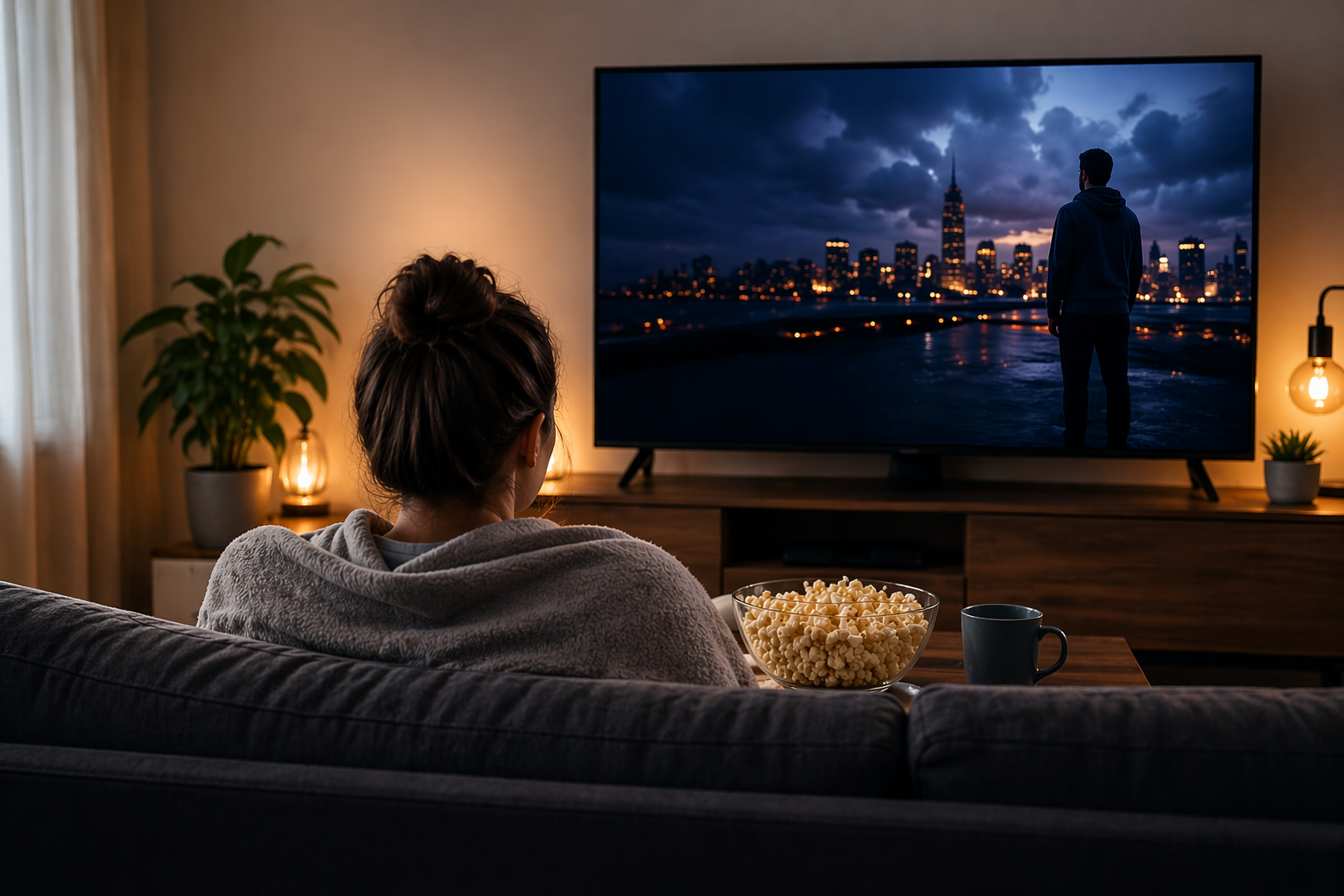
Binge-watching (लंबे समय तक देखने की प्रथा) is the practice of watching entertainment or informational content for an extended period, usually a single television show. Binge-watching has become a defining habit of the digital age. Whether it’s a gripping web series, a documentary, or educational content, many people today spend hours glued to screens—often saying, “Just one more episode.”
But is it harmless entertainment, or does it have stronger effects on our physical and mental health? This comprehensive guide explores everything you need to know—from definition and psychology to health impacts and practical solutions.
What is Binge-Watching?
It refers to watching multiple episodes of a television show or other video content in one sitting, often for several hours. Traditionally, TV shows were released weekly, but streaming platforms like Netflix, Amazon Prime, and Disney+ have changed the landscape. Entire seasons are now available instantly, encouraging prolonged viewing sessions.
Typically, watching 2–6 episodes in one sitting is considered binge-watching.
Why Has Binge-Watching Become So Popular?
On-Demand Streaming Platforms
Streaming services allow users to watch content anytime, anywhere, without waiting for weekly releases.
Autoplay Feature
Platforms automatically play the next episode, reducing the friction of stopping.
Escapism and Relaxation
People often binge-watch to relax, escape stress, or cope with emotional challenges.
Engaging Storytelling
Modern series are designed with cliffhangers that encourage continuous viewing.
Social Trends
Discussing shows on social media creates pressure to “keep up.”
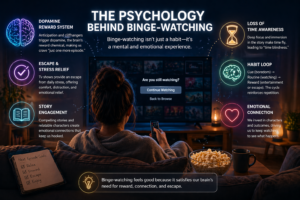
The Psychology Behind Binge-Watching
It isn’t just a habit—it’s deeply tied to human psychology.
- Watching engaging content releases dopamine, the brain’s pleasure chemical
- This creates a rewarding loop, encouraging repeated behavior
- Some researchers even compare it to behavioral addiction
In many cases, binge-watching is used as:
- A stress reliever
- A coping mechanism for loneliness
- A way to avoid real-life problems
However, excessive reliance on it may lead to unhealthy patterns.
Is Binge-Watching Addictive?
Research suggests it can show addiction-like symptoms, such as:
- Loss of control over viewing time
- Ignoring responsibilities
- Watching even when tired or stressed
- Feeling guilty afterward
Studies indicate that it may resemble other behavioral addictions, though more research is needed.
Health Effects of Binge-Watching
Mental Health Impact
Scientific research shows strong links between binge-watching and mental health concerns, such as:
- Depression
- Anxiety
- Stress
- Loneliness
- Sleep disorders
A meta-analysis found significant associations between binge-watching and all these issues, with the strongest links to stress and anxiety.
Sleep Disturbances
Late-night binge sessions can:
- Delay sleep cycles
- Reduce sleep quality
- Causes fatigue the next day
Even watching “just one more episode” can disrupt your biological clock and reduce productivity.
Physical Health Risks
Binge-watching promotes a sedentary lifestyle, which can lead to:
- Weight gain
- Poor posture
- Heart problems
- Reduced metabolism
Prolonged sitting is linked to serious risks such as obesity and cardiovascular issues.
Unhealthy Eating Habits
Many people snack mindlessly while watching:
- Increased junk food consumption
- Overeating due to distraction
- Poor digestion
Social Isolation
Spending long hours alone watching screens may:
- Reduce social interactions
- Affect relationships
- Increase feelings of loneliness
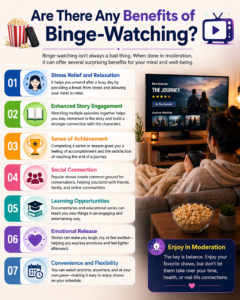
Are There Any Benefits of Binge-Watching?
While often criticized, it can offer several benefits when done in moderation. It can be a source of relaxation, learning, and even social connection if approached mindfully.
Stress Relief and Relaxation
Watching your favorite shows can help you unwind after a long day. It provides a mental break from daily pressures and helps you relax in a comfortable environment.
Enhanced Story Engagement
It allows you to follow storylines without long gaps between episodes. This keeps the narrative fresh in your mind and deepens your emotional connection to characters.
Sense of Achievement
Finishing a series or season can give a feeling of accomplishment. It creates a sense of closure and satisfaction, similar to completing a task or goal.
Social Connection
Popular shows often become topics of conversation among friends, family, or online communities. Watching them helps you feel included and engaged in shared cultural experiences.
Learning Opportunities
Many shows are informative or based on real-life events. Binge-watching documentaries or educational content can entertainingly expand your knowledge.
Emotional Release
Engaging with stories can trigger emotions like joy, sadness, or excitement. This emotional release can be therapeutic and help you process your own feelings.
Convenience and Flexibility
Streaming platforms allow you to watch content anytime, at your own pace. This flexibility makes it easy to fit entertainment into your schedule without waiting for weekly episodes.
Binge-Watching vs Healthy Watching
Warning Signs of Problematic Binge-Watching
You might need to reassess your habits if you:
- Lose track of time regularly
- Skip meals or sleep
- Ignore responsibilities
- Feel anxious when not watching
- Use shows to avoid real-life issues
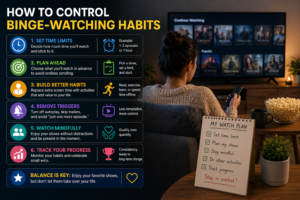
How to Control Binge-Watching Habits?
Binge-watching can be enjoyable, but without limits, it may affect your sleep, productivity, and overall well-being. The key is not to eliminate it, but to develop healthier viewing habits.
Set Time Limits
Start by deciding how much time you’ll spend watching—such as one or two episodes per session. Setting boundaries in advance prevents overindulgence and helps you stay disciplined.
Plan What to Watch
Instead of endlessly browsing, pick your show or episode beforehand. This simple habit reduces decision fatigue and keeps your viewing purposeful rather than impulsive.
Build Better Habits
Balance your screen time with meaningful activities like reading, exercise, or hobbies. Replacing excess watching with productive habits improves both mental and physical health.
Remove Triggers
Streaming platforms are designed to keep you hooked. Turn off autoplay and avoid unnecessary recommendations so you’re less tempted to continue watching beyond your limit.
Watch Mindfully
Be present while watching instead of multitasking on your phone or laptop. Mindful viewing enhances enjoyment and reduces the urge to keep watching more.
Track Your Progress
Keep an eye on how much time you spend watching shows each day. Monitoring your habits increases awareness and encourages positive changes over time.
Maintain Balance
Entertainment should complement your life, not control it. Prioritize sleep, work, and relationships while enjoying shows in moderation.
When Should You Seek Help?
Consult a professional if binge-watching:
- Affects your mental health
- Disrupts sleep regularly
- Interferes with work or relationships
- Feels uncontrollable
Global Trends of Binge-Watching
- A large percentage of adults engage in binge-watching regularly
- Younger audiences binge-watch more frequently
- Streaming platforms continue to drive this behavior
For example, surveys show a majority of streaming users binge-watch at least occasionally, with higher rates among younger viewers.
Tips for Healthy Digital Consumption
- Follow the 20-20-20 rule (for eye health)
- Maintain proper posture
- Use blue-light filters
- Schedule screen-free time
- Prioritize real-life interactions
Binge-Watching and Mental Balance
Binge-watching becomes harmful when it replaces:
- Sleep
- Physical activity
- Social interaction
- Productivity
But when used wisely, it can be a source of:
- Relaxation
- Inspiration
- Entertainment
Conclusion
Binge-watching reflects how dramatically our entertainment habits have evolved in the digital era. While it offers convenience, relaxation, and immersive storytelling, excessive viewing can gradually affect sleep, mental well-being, and physical health. What starts as a harmless habit can turn into a routine that disrupts balance if left unchecked.
That said, binge-watching isn’t inherently harmful—it becomes problematic only when it replaces essential aspects of a healthy lifestyle like rest, activity, and real-world interactions. Being mindful of how much and when you watch can make a significant difference in maintaining overall well-being.
Ultimately, the goal is not to eliminate binge-watching but to enjoy it responsibly. By setting limits, taking breaks, and prioritizing your health, you can strike a balance that lets you stay entertained without compromising your quality of life.
By setting time limits, planning your viewing, and staying mindful, you can strike the right balance between entertainment and a healthy lifestyle. When controlled properly, binge-watching remains a fun and rewarding experience rather than something that disrupts your routine.
FAQs About Binge-Watching
1. What is binge-watching?
It refers to watching multiple episodes of a TV show or video content in one sitting, often for several hours. It has become common for streaming platforms to release full seasons at once.
2. How many hours count as binge-watching?
There is no strict rule, but watching 2–6 episodes or spending more than 2–3 hours continuously is generally considered binge-watching. The key factor is prolonged, uninterrupted viewing.
3. Is binge-watching harmful to health?
It can be harmful if done excessively, leading to issues like poor sleep, eye strain, and reduced physical activity. Moderate and mindful viewing, however, is usually not a concern.
4. Can binge-watching affect mental health?
Yes, excessive watching is linked to stress, anxiety, and even depression in some cases. It may also increase feelings of loneliness if it replaces social interaction.
5. Does binge-watching disturb sleep?
Late-night it can disrupt sleep patterns by delaying bedtime and reducing sleep quality. Screen exposure before bed also affects the body’s natural sleep cycle.
6. Is binge-watching addictive?
It can become habit-forming due to the pleasure and engagement it provides. Some people may find it hard to stop, especially with autoplay features and cliffhanger endings.
7. Are there any benefits of binge-watching?
Yes, when done in moderation, it can help reduce stress, provide entertainment, and even offer educational value through documentaries and informative content.
8. How can I control binge-watching habits?
You can set time limits, turn off autoplay, take regular breaks, and avoid watching late at night. Replacing screen time with hobbies or physical activity also helps maintain balance.
Reference: https://en.wikipedia.org/wiki/Binge-watching