
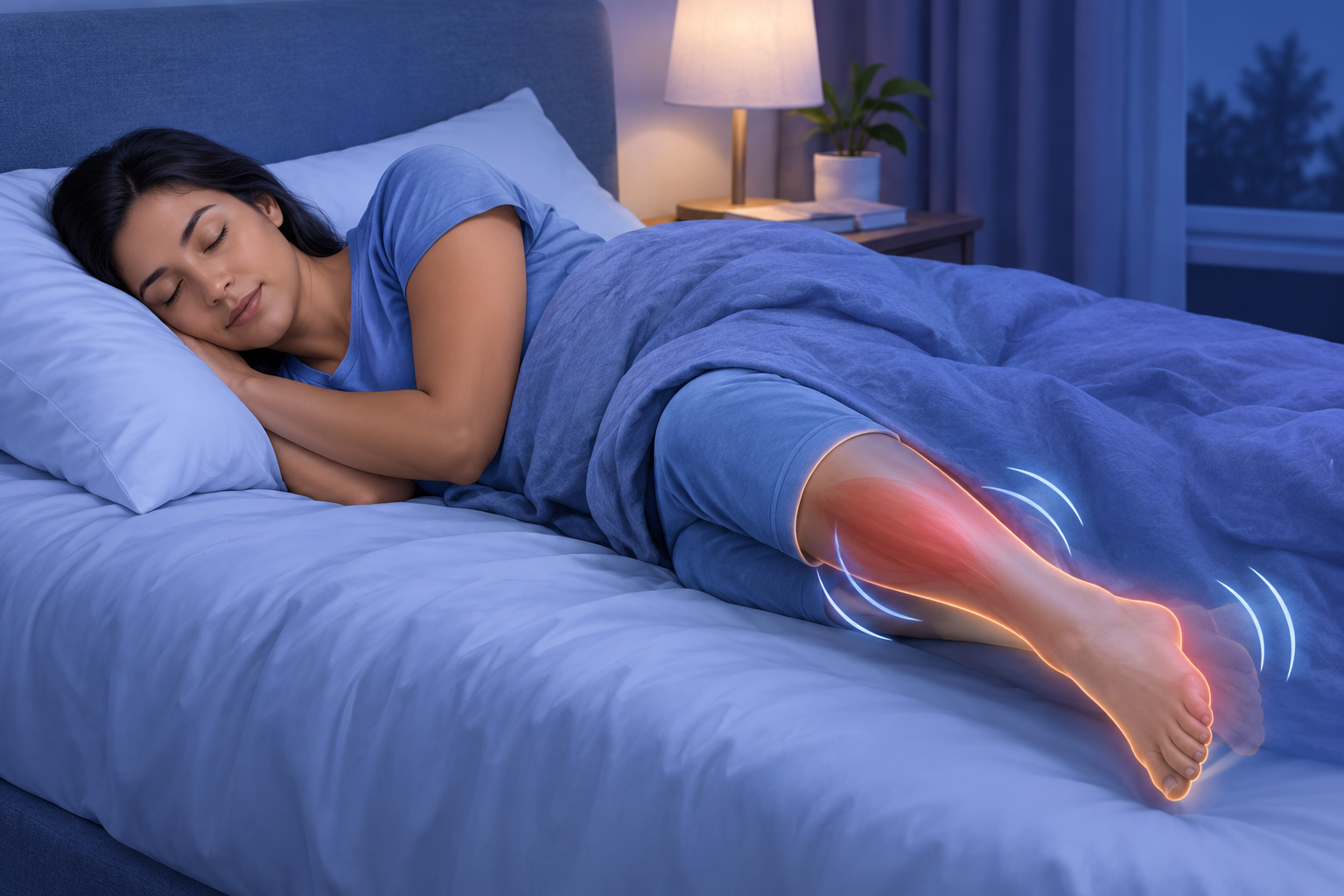
A hypnic jerk (हिपनिक जर्क) is defined as a brief and sudden involuntary contraction of the muscles of the body that occurs when a person is beginning to fall asleep, often causing the person to jump and awaken suddenly for a moment. Hypnic jerks are one form of involuntary muscle twitches called myoclonus. It may feel like a quick jump, a kick, a twitch, or the sensation of falling from a height. Sometimes, the movement wakes you up just as you begin to relax. Hypnic jerks, also called sleep starts, are common and usually harmless. They may become more noticeable when you are tired, stressed, consuming too much caffeine, or following an irregular sleep schedule. Understanding the causes, symptoms, and prevention of hypnic jerks can help you sleep more comfortably and recognise when medical advice may be necessary.
What Is a Hypnic Jerk?
A hypnic jerk is a brief, sudden muscle contraction that occurs during the transition from wakefulness to sleep. It is a type of involuntary movement that happens when the body begins to relax.
For example, you may be lying in bed with your eyes closed when your leg suddenly kicks or your entire body jerks. You might feel as if you are falling down stairs, slipping off a chair, or missing a step. The movement can be strong enough to wake you up.
Hypnic jerks are also known as:
-
Sleep starts
-
Hypnagogic jerks
-
Sleep twitches
-
Hypnagogic myoclonus
They can affect people of different ages, including healthy adults and children. Some people experience them occasionally, while others notice them more often during periods of poor sleep.
A hypnic jerk is not usually a sign of a serious medical condition. However, if the movements regularly disturb your sleep or occur with other unusual symptoms, it is worth discussing them with a healthcare professional.
What Are the Symptoms of Hypnic Jerks?
The symptoms of hypnic jerks can vary. Some people experience a small twitch in one muscle, while others experience a sudden movement involving several parts of the body.
Common symptoms include:
-
Sudden jerking of the arms, legs, shoulders, or entire body.
-
A brief muscle twitch while falling asleep.
-
A sensation of falling, slipping, or tripping.
-
A sudden feeling of surprise or fear.
-
Waking up immediately after the movement.
-
A momentary increase in heartbeat after being startled.
-
A brief dream-like image or sensation accompanying the jerk.
Most hypnic jerks last only a moment. They may occur once or several times as a person tries to fall asleep.
Some people find these movements amusing, while others become worried because the experience feels unexpected. If the movements occur occasionally and you otherwise feel well, they are generally harmless.
However, repeated movements that prevent you from falling asleep can affect your rest and lead to daytime tiredness.
What Causes Hypnic Jerks?
The exact cause of hypnic jerks is not fully understood. Researchers believe they are associated with changes in brain and muscle activity during the transition from wakefulness to sleep.
As you begin to fall asleep, your muscles relax and your awareness decreases. During this transition, the nervous system may produce a sudden signal that causes a muscle or group of muscles to contract.
One theory suggests that the brain may interpret the feeling of muscle relaxation as falling, triggering a brief movement. However, this explanation has not been established as the single cause of hypnic jerks.
Several factors may make sleep starts more likely or noticeable.
1. Lack of Sleep
Sleep deprivation is a possible contributor to hypnic jerks. When you do not get enough sleep, your body becomes tired, and your normal sleep pattern may be disrupted.
Staying awake late at night to work, study, or use electronic devices may make it harder to maintain a regular sleep routine.
What can help? Aim for sufficient sleep each night. Most adults need at least seven hours, although individual needs vary. Try to go to bed and wake up at consistent times.
2. Stress and Anxiety
Stress can keep your mind active even when your body is ready for sleep. Worries about work, family responsibilities, finances, or personal problems may make it difficult to relax.
Stress and poor sleep can also reinforce each other. When you sleep badly, you may feel more stressed the next day, which can make it harder to fall asleep the following night.
What can help? Try slow breathing, meditation, gentle stretching, or quiet reading before bedtime.
3. Caffeine Consumption
Caffeine is a stimulant found in coffee, tea, energy drinks, cola, and some other products. It can increase alertness and delay sleep.
Consuming caffeine late in the day may make it harder to relax at bedtime. In some people, this may contribute to more noticeable hypnic jerks.
What can help? Reduce caffeine in the afternoon and evening. If you are sensitive to caffeine, consider avoiding it for longer before bedtime.
4. Vigorous Exercise Before Bedtime
Regular exercise supports general health and often improves sleep. However, intense physical activity shortly before bedtime may leave some people feeling alert.
If you notice a consistent connection between late workouts and difficulty falling asleep, consider exercising earlier in the day.
Gentle stretching or a relaxed walk in the evening may be more suitable for winding down.
5. Irregular Sleep Schedule
Going to bed at different times every night can make it harder to maintain a stable sleep pattern. Shift work, travel, late-night screen use, and long daytime naps may contribute to irregular sleep.
Try to maintain consistent sleeping and waking times, including on weekends.
6. Certain Medicines and Other Factors
Some medicines that affect the nervous system may be associated with involuntary movements in certain people. Alcohol can also disrupt sleep, even if it initially makes you feel sleepy.
If hypnic jerks begin after you start a new medicine or change a dose, speak with your doctor. Do not stop prescribed medication without medical advice.
These factors may contribute to sleep disruption, but they do not necessarily cause hypnic jerks in every person.
Are Hypnic Jerks Dangerous?
In most cases, hypnic jerks are harmless and do not require medical treatment. They are a common experience and do not automatically indicate a neurological disorder.
An occasional jerk while falling asleep is usually nothing to worry about. However, frequent movements can become frustrating when they repeatedly wake you or make you anxious about going to bed.
Poor sleep may then cause daytime tiredness, difficulty concentrating, irritability, and reduced productivity.
It is important to distinguish ordinary hypnic jerks from other kinds of involuntary movements. Repeated jerking during full wakefulness, movements throughout the night, or episodes involving confusion or injury should be assessed by a healthcare professional.
How to Stop Hypnic Jerks Naturally
There is no guaranteed way to prevent every hypnic jerk. However, improving sleep habits and reducing common triggers may help you experience fewer disturbances.
1. Follow a Regular Sleep Schedule
Going to bed and waking up at approximately the same time every day can support your body’s natural sleep-wake rhythm.
Avoid repeatedly staying up late and trying to compensate by sleeping much longer the following morning.
Choose a bedtime that allows enough time for restful sleep. Most adults should aim for at least seven hours of sleep each night.
2. Practise Relaxation Before Bed
Relaxation techniques can help reduce stress and prepare your body for sleep.
You can try:
-
Slow, comfortable breathing.
-
Gentle yoga or stretching.
-
Meditation or mindfulness.
-
Reading a relaxing book.
-
Listening to quiet music.
Spend 10–15 minutes on an activity that helps you feel calm. Avoid turning bedtime into a time for worrying about tomorrow’s responsibilities.
3. Reduce Caffeine Intake
Coffee, tea, energy drinks, and other caffeinated products can interfere with sleep.
Try avoiding caffeine for at least six to eight hours before bedtime, or longer if you are particularly sensitive to it.
Remember that some teas and soft drinks also contain caffeine. Check product labels when necessary.
4. Limit Screen Time Before Sleep
Using a phone, tablet, or computer late at night may keep you mentally stimulated and delay bedtime.
Try putting away electronic devices around 30–60 minutes before sleep. If you need to use a screen, reduce brightness and avoid exciting or stressful content.
A quiet bedtime routine can make it easier to relax.
5. Exercise Regularly
Regular physical activity can improve sleep quality and help manage stress.
Walking, cycling, swimming, and yoga are suitable options for many people. Choose an activity that matches your fitness level.
If intense exercise close to bedtime makes you feel alert, move your workout to an earlier time.
6. Create a Comfortable Bedroom
Your sleeping environment can affect how easily you fall asleep.
Try to keep your bedroom:
-
Quiet and dark.
-
Comfortably cool.
-
Free from unnecessary distractions.
-
Equipped with a comfortable mattress and pillow.
Use comfortable nightwear and choose bedding that helps you maintain a pleasant temperature.
These changes cannot guarantee that hypnic jerks will stop, but they may support more restful sleep.
7. Avoid Excessive Alcohol and Nicotine
Alcohol can make you feel sleepy initially, but it can disrupt sleep later in the night. Nicotine is a stimulant that may make it harder to fall asleep.
Reducing or avoiding these substances can support better sleep and general health.
8. Do Not Worry Too Much About Occasional Jerks
A sudden jerk can feel surprising, especially if it happens just as you begin to drift off. However, worrying about the next movement may make bedtime more stressful.
If a jerk wakes you, take a few comfortable breaths, relax your muscles, and allow yourself to settle back into sleep.
If the movements happen frequently or cause significant distress, seek medical advice rather than assuming that relaxation techniques alone will solve the problem.
Can Hypnic Jerks Be Cured?
Hypnic jerks are not usually considered a disease that needs to be cured. They are a common sleep-related phenomenon.
If they occur occasionally, treatment is generally unnecessary. Improving sleep habits and reducing possible triggers may help some people experience them less often.
If the movements are frequent, severe, or consistently prevent you from falling asleep, a doctor can assess whether another condition, a medicine, or a sleep problem may be contributing.
There is no universally recommended medicine specifically for ordinary hypnic jerks. Sleeping pills, sedatives, and supplements should not be used solely for this problem without appropriate medical advice.
The most useful first step is to understand when the movements happen and whether anything in your daily routine may be affecting your sleep.
Hypnic Jerk vs. Other Sleep-Related Conditions
Not every movement that occurs at night is a hypnic jerk. Some sleep-related conditions can have similar features but require different approaches.
| Condition | Main characteristics |
|---|---|
| Hypnic jerk | A brief, sudden movement while falling asleep. |
| Restless legs syndrome (RLS) | An urge to move the legs, often with uncomfortable sensations that worsen during rest. |
| Periodic limb movements of sleep (PLMS) | Repetitive limb movements that occur during sleep. |
| Sleep-related seizures | Episodes involving seizure-like movements or other neurological symptoms that need medical assessment. |
| Muscle fasciculations | Small muscle twitches that may also occur while a person is awake. |
These conditions can sometimes appear similar. The timing, frequency, associated symptoms, and pattern of movements help healthcare professionals distinguish between them.
For example, restless legs syndrome usually involves an uncomfortable urge to move the legs while resting. Hypnic jerks, in contrast, are sudden movements associated with the transition into sleep.
Periodic limb movements of sleep are repetitive movements during sleep, rather than simply a single jerk while falling asleep.
If you are unsure which type of movement you are experiencing, a healthcare professional can help identify the likely cause.
When Should You See a Doctor?
Occasional hypnic jerks generally do not require medical attention. However, you should consult a healthcare professional if:
-
The movements happen frequently and regularly prevent you from sleeping.
-
Jerking occurs repeatedly when you are fully awake.
-
Movements continue throughout the night rather than occurring mainly as you fall asleep.
-
You experience significant pain or injury.
-
The episodes involve confusion, loss of awareness, or other unusual symptoms.
-
The movements begin after starting a new medicine or changing a dose.
-
You experience persistent daytime sleepiness or ongoing sleep problems.
A doctor may ask about your sleep routine, caffeine consumption, stress levels, medicines, and the timing of your symptoms.
A sleep diary can help you identify patterns. If the symptoms suggest another sleep or neurological condition, your doctor may recommend further assessment or a sleep study.
A typical, occasional hypnic jerk does not usually require special testing.
Seek urgent medical care if you experience a first suspected seizure, prolonged seizure-like activity, serious breathing difficulty, or an episode that causes a significant injury.
How Are Hypnic Jerks Diagnosed?
There is no single test required to diagnose every hypnic jerk. In typical cases, a healthcare professional can often identify the likely cause by discussing your symptoms and sleep habits.
Your doctor may ask questions such as:
-
Do the movements happen just as you are falling asleep?
-
Which parts of your body move?
-
Do you experience a sensation of falling?
-
How often do the movements occur?
-
Do they wake you up or prevent you from sleeping?
-
How much caffeine do you consume?
-
Have you recently started or changed any medicines?
Keeping a sleep diary for one or two weeks may help. Record your bedtime, wake-up time, caffeine intake, and when you notice the movements.
If the symptoms are unusual or another condition is suspected, a doctor may recommend a neurological examination or a sleep study.
The purpose of diagnosis is not simply to identify the movement but also to determine whether another condition is affecting your sleep.
Can Hypnic Jerks Occur Every Night?
Yes. Some people experience hypnic jerks frequently, including on many nights in a row.
Frequent episodes do not necessarily mean that a person has a serious medical condition. However, recurring movements that delay sleep or cause repeated awakenings deserve attention.
Start by reviewing your sleep schedule, caffeine intake, stress levels, and evening activities. Consider whether the episodes began after a change in your routine or medication.
If the movements continue despite improvements in sleep habits, consult a healthcare professional. They can help determine whether further investigation is needed.
Do Hypnic Jerks Mean You Have a Vitamin Deficiency?
Not necessarily. An occasional hypnic jerk does not prove that you have a vitamin or mineral deficiency.
Although nutritional deficiencies can contribute to certain muscle or neurological symptoms, they should not automatically be blamed for sleep starts.
Taking supplements without identifying a deficiency may not help and can sometimes be harmful.
If you also experience persistent muscle cramps, weakness, unusual sensations, or other symptoms, discuss them with your doctor. They can decide whether an examination or blood tests are appropriate.
Conclusion
A hypnic jerk is a sudden, involuntary muscle movement that occurs while falling asleep. It may feel like a jump, kick, twitch, or falling sensation. Although the experience can be surprising, hypnic jerks are usually harmless and do not indicate a serious health problem.
Sleep deprivation, stress, caffeine, and irregular sleep habits may make these movements more noticeable. Maintaining a consistent sleep schedule, reducing late-day stimulants, exercising regularly, and practising relaxation techniques can help support better sleep.
Remember that occasional hypnic jerks are a normal experience for many people. You do not need to panic when one happens.
However, if the movements become frequent, cause significant sleep disruption, or occur alongside unusual symptoms, consult a healthcare professional to rule out other causes.
Better sleep begins with consistent habits, a relaxing bedtime routine, and understanding what your body is experiencing.
Frequently Asked Questions (FAQs)
1. What is a hypnic jerk?
A hypnic jerk is a sudden, involuntary muscle movement that happens when you are falling asleep. It may affect one muscle, a limb, or several parts of the body.
2. Why does my body jerk when I am falling asleep?
The exact cause is not fully understood. Changes in nervous system activity during the transition from wakefulness to sleep may trigger a sudden muscle contraction.
3. Are hypnic jerks dangerous?
Most hypnic jerks are harmless and do not require treatment. Frequent movements, injuries, confusion, or jerking while fully awake should be assessed by a healthcare professional.
4. Can stress cause hypnic jerks?
Stress may contribute to sleep difficulties and make hypnic jerks more noticeable. Relaxation techniques and a consistent sleep routine may help.
5. Can caffeine increase hypnic jerks?
Caffeine can interfere with sleep and may make hypnic jerks more noticeable in some people. Reducing caffeine, particularly later in the day, may help.
6. How can I stop hypnic jerks naturally?
Maintain a regular sleep schedule, get adequate rest, reduce late-day caffeine, exercise regularly, and practise relaxation before bed. These steps may reduce disturbances but cannot guarantee complete prevention.
7. Are hypnic jerks a sign of epilepsy?
Ordinary hypnic jerks are not the same as epileptic seizures. However, unusual or repeated seizure-like movements should be medically evaluated.
8. Can hypnic jerks occur every night?
Yes. Some people experience them frequently. If they repeatedly delay sleep or cause distress, consult a healthcare professional to check for possible triggers or other conditions.
9. Do hypnic jerks mean I have a vitamin deficiency?
No. An occasional hypnic jerk does not establish a vitamin or mineral deficiency. Supplements are not routinely needed for ordinary sleep starts.
10. When should I worry about hypnic jerks?
Seek medical advice if the movements cause persistent sleep disruption, occur frequently while awake, cause injury, or are accompanied by confusion or loss of awareness. Seek urgent care for a first suspected seizure.
Medical disclaimer: This article is intended for general educational purposes and does not replace professional medical advice, diagnosis, or treatment.
Reference: https://en.wikipedia.org/wiki/Hypnic_jerk