Skip to content
SIDDHASPIRITUALITY SIDDHASPIRITUALITY

  • HOME
  • CONTACT
  • PRIVACY POLICY
  • ABOUT US
SIDDHASPIRITUALITY
SIDDHASPIRITUALITY

27/04/2026

Computer Vision Syndrome Explained: Signs, Risks & Easy Relief Tips

Computer vision syndrome (CVS) [कंप्यूटर विज़न सिंड्रोम] is a condition resulting from focusing the eyes on a computer, smartphone, or other display device for prolonged, uninterrupted periods, and from the eye’s muscles being unable to recover from the constant tension required to maintain focus on a close object. In today’s digital world, screens are unavoidable. Whether you’re working on a laptop, scrolling through your phone, or binge-watching your favorite series, your eyes are constantly engaged. This prolonged screen exposure has led to a growing health concern known as Computer Vision Syndrome (CVS), also called digital eye strain.

Studies suggest that 50% to 90% of people who use screens regularly experience symptoms of CVS, making it one of the most common modern health issues.

This comprehensive guide explains everything you need to know about computer vision syndrome—its causes, symptoms, risk factors, treatment options, and effective prevention strategies.

What is Computer Vision Syndrome?

Computer Vision Syndrome refers to a group of eye- and vision-related problems that occur due to prolonged use of digital devices such as computers, tablets, smartphones, and e-readers.

Unlike traditional reading, viewing digital screens requires more effort due to factors such as glare, pixelated text, and constant refocusing.

Key Facts

  • Affects around 60 million people globally
  • Triggered by 2+ hours of continuous screen time
  • Increasing rapidly due to remote work and digital lifestyles
https://siddhaspirituality.com/wp-content/uploads/2026/04/Computer-Vision-Syndrome-200x300.png
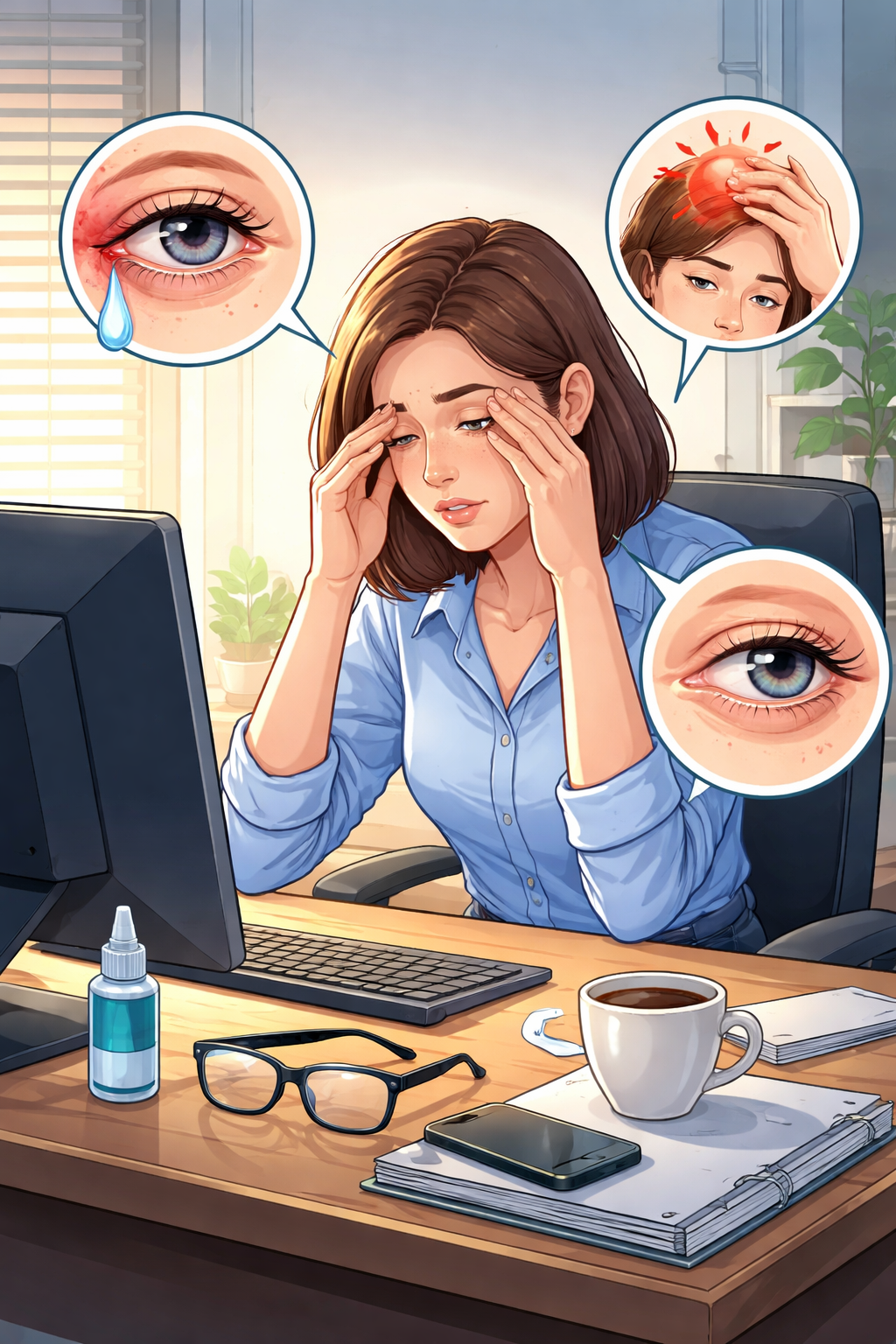
Illustration showing a person using a computer with symptoms of ‘computer vision syndrome’, having eye strain, dryness, and fatigue.

Causes of Computer Vision Syndrome

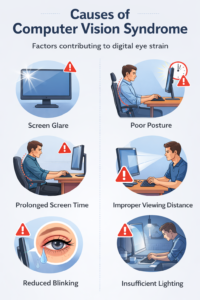
CVS is primarily caused by prolonged screen exposure, but several underlying factors contribute to the condition.

Continuous Screen Use

Spending long hours staring at screens forces your eyes to work harder, especially when focusing on close objects.

Reduced Blinking

When using digital devices, people blink significantly less (about 3–7 times per minute) than at normal rates. This leads to dryness and irritation.

Constant Refocusing

Digital screens consist of pixels, causing your eyes to continuously adjust focus, leading to strain.

Poor Lighting & Glare

Excessive brightness, reflections, or dim lighting increases visual discomfort.

Improper Viewing Distance

Sitting too close or too far from the screen can strain eye muscles.

Incorrect Posture

Bad posture leads to neck, shoulder, and back pain along with eye strain.
https://siddhaspirituality.com/wp-content/uploads/2026/04/Causes-of-computer-vision-syndrome-200x300.png
Infographic showing causes of computer vision syndrome, like screen glare, poor posture, and prolonged screen time.

Symptoms of Computer Vision Syndrome

The symptoms of CVS can vary from mild discomfort to severe irritation, depending on screen time and individual sensitivity.

Common Eye Symptoms

  • Dry or watery eyes
  • Blurred or double vision
  • Eye irritation or burning sensation
  • Redness in the eyes
  • Sensitivity to light

Physical Symptoms

  • Headaches
  • Neck and shoulder pain
  • Back pain
  • Difficulty focusing

These symptoms are usually temporary but can significantly affect productivity and quality of life.
https://siddhaspirituality.com/wp-content/uploads/2026/04/Eye-strain-from-screen-use-symptoms-300x300.png
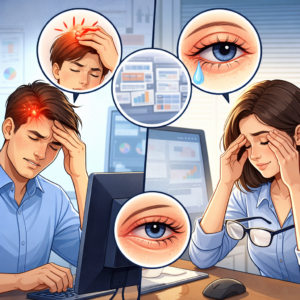
Illustration showing symptoms of ‘computer vision syndrome’ like headache, blurred vision, and eye strain caused by computer use.

Computer Vision Syndrome Risk Factors

Certain individuals are more prone to developing computer vision syndrome:

  • People using screens for 4+ hours daily
  • IT professionals and students
  • Individuals with dry eye disease
  • People with uncorrected vision problems
  • Individuals over 40 (due to reduced focusing ability)

Diagnosis of Computer Vision Syndrome

CVS is diagnosed through a comprehensive eye examination by an ophthalmologist or optometrist.

Diagnostic Steps

  • Vision testing
  • Eye coordination assessment
  • Evaluation of focusing ability
  • Discussion of screen habits

When to See a Doctor

Consult an eye specialist if you experience:

  • Persistent blurred vision
  • Severe headaches
  • Chronic dry eyes
  • Difficulty focusing

Early diagnosis can prevent complications and improve comfort.

Treatment of Computer Vision Syndrome

The good news? CVS is manageable and often reversible with simple lifestyle changes.

Lubricating Eye Drops

Artificial tears help reduce dryness and irritation.

Corrective Eyewear

Special computer glasses can improve focus and reduce strain.

Ergonomic Adjustments

  • Screen at eye level
  • Proper chair support
  • Comfortable viewing distance

Adjust Lighting

Reduce glare and optimize brightness for better comfort.

https://siddhaspirituality.com/wp-content/uploads/2026/04/Eye-care-in-a-bright-workspace-1-200x300.png
A person using eye drops and adjusting screen setup to relieve digital eye strain, resulting from ‘computer vision syndrome’.

Prevention Tips (Highly Effective)

Preventing computer vision syndrome is easier than treating it. Here are proven strategies:

Follow the 20-20-20 Rule for Computer Vision Syndrome

Every 20 minutes, look at something 20 feet away for 20 seconds.

Maintain Proper Screen Distance

Keep your screen about 20–28 inches away from your eyes.

Blink Frequently

Blinking keeps your eyes hydrated and prevents dryness.

Adjust Screen Settings

  • Increase font size
  • Adjust contrast and brightness
  • Use dark mode if needed

Reduce Screen Glare

Use anti-glare screens or adjust lighting.

Take Regular Breaks

Avoid prolonged screen use.

https://images.unsplash.com/photo-1551836022-deb4988cc6c0?q=80&w=1200
Ergonomic workspace setup showing proper posture, lighting, and screen distance to prevent eye strain, resulted from ‘computer vision syndrome’.

Impact of Computer Vision Syndrome

Although CVS doesn’t cause permanent eye damage, it can significantly impact:

  • Work productivity
  • Sleep quality (especially with nighttime screen use)
  • Overall comfort and well-being

In severe cases, it may lead to chronic headaches and reduced efficiency.

Computer Vision Syndrome in Children

Children are increasingly affected due to:

  • Online education
  • Gaming
  • Smartphone usage

Research indicates that 50–60% of children experienced CVS during increased screen usage periods, especially during the pandemic.

Ayurveda Treatment for Computer Vision Syndrome

Ayurveda approaches Computer Vision Syndrome as an imbalance primarily related to eye strain, dryness, and excess screen exposure, which can aggravate the body’s Pitta (heat) and Vata (dryness) doshas. The focus is on soothing, nourishing, and restoring eye health naturally.

Common Ayurveda Treatments

1. Netra Tarpana (Eye Rejuvenation Therapy)

A specialized therapy where medicated ghee is retained around the eyes. It helps reduce dryness, improves vision, and relaxes strained eye muscles.

2. Triphala Eye Wash

A gentle herbal wash made from Triphala (a blend of three fruits). It is traditionally used to cleanse the eyes and reduce irritation and redness.

3. Herbal Eye Drops (Anjanam)

Ayurvedic eye drops prepared from natural herbs may help lubricate the eyes and relieve dryness and burning sensations.

4. Shirodhara (Stress Relief Therapy)

A calming treatment where warm herbal oil is poured over the forehead. It helps reduce stress, which indirectly eases eye strain and headaches.

5. Nasya Therapy

Application of medicated oils through the nose is believed to improve circulation in the head and support eye health.

Lifestyle & Home Remedies for Computer Vision Syndrome

  • Cold compress with rose water to soothe tired eyes
  • Cucumber slices to reduce puffiness and strain
  • Frequent blinking and eye exercises to maintain moisture
  • Balanced diet rich in ghee, green vegetables, and antioxidants

Important Note

Ayurvedic treatments should be performed under the guidance of a qualified practitioner, especially therapies such as Netra Tarpana and Nasya. Avoid self-medication for eye conditions.

In short, Ayurveda focuses on natural healing, relaxation, and long-term eye care, making it a supportive approach alongside modern treatments for managing digital eye strain.

Home Remedies for Computer Vision Syndrome

Managing Computer Vision Syndrome doesn’t always require complex treatments—simple, realistic home remedies can provide quick and effective relief when practiced consistently.

Easy & Effective Remedies

1. Follow the 20-20-20 Rule

Every 20 minutes, look at something 20 feet away for 20 seconds. This relaxes eye muscles and reduces continuous strain from screens.

2. Blink More Often

Conscious blinking helps keep your eyes moist and prevents dryness. Screen use reduces natural blinking, so making an effort really helps.

3. Use a Cold Compress

Place a clean, cool cloth over closed eyes for 5–10 minutes. This reduces irritation, redness, and fatigue after long screen sessions.

4. Adjust Screen Brightness & Contrast

Your screen should match the lighting of your room—not too bright or too dim. Proper contrast reduces strain and improves viewing comfort.

5. Maintain Proper Screen Distance

Keep your screen about an arm’s length away (20–28 inches). This prevents excessive focusing effort and reduces eye fatigue.

6. Improve Lighting Conditions

Avoid harsh glare or reflections on your screen. Use soft, indirect lighting to create a comfortable viewing environment.

7. Stay Hydrated

Drinking enough water supports natural tear production, helping prevent dry eyes.

8. Limit Continuous Screen Time

Take short breaks every 1–2 hours. Even a quick walk or closing your eyes for a minute can refresh your vision.

Quick Tip

Small habits done daily are more effective than occasional treatments. Consistency is the key to preventing and relieving digital eye strain. These home remedies are simple, safe, and highly practical—perfect for anyone dealing with daily screen exposure.

Conclusion

Computer Vision Syndrome is one of the most common yet often overlooked health issues in our screen-driven lifestyle. From mild discomfort like dryness and eye fatigue to more disruptive symptoms such as headaches and blurred vision, CVS can quietly affect your productivity, comfort, and overall well-being.

The key thing to understand is that CVS is not a permanent condition; it is a signal from your eyes that they are overworked. The good news is that with simple, consistent changes—like following the 20-20-20 rule, improving your workspace ergonomics, reducing screen glare, and taking regular breaks—you can significantly reduce or even prevent these symptoms.

It’s also important to recognize that ignoring early signs can lead to worsening discomfort over time. Being proactive about eye care, maintaining healthy screen habits, and seeking professional advice when needed can make a big difference.

In a world where digital devices are essential, protecting your eye health should be a priority—not an afterthought. By making small adjustments today, you can ensure long-term visual comfort and maintain a healthier relationship with your screens.

Frequently Asked Questions

1. What is Computer Vision Syndrome (CVS)?

Computer Vision Syndrome refers to a group of eye and vision problems caused by prolonged use of digital screens. It commonly includes symptoms like eye strain, dryness, and headaches. It is also known as digital eye strain.

2. What are the main symptoms of CVS?

Common symptoms include dry eyes, blurred vision, headaches, eye irritation, and neck or shoulder pain. These symptoms usually occur after long hours of screen use. They are typically temporary but can become frequent if ignored.

3. What causes Computer Vision Syndrome?

CVS is mainly caused by prolonged screen time, reduced blinking, poor lighting, and screen glare. Improper posture and incorrect viewing distance also contribute. These factors force your eyes to work harder than usual.

4. How can I prevent digital eye strain?

You can prevent CVS by following the 20-20-20 rule, adjusting screen brightness, and maintaining proper posture. Taking regular breaks and blinking frequently also helps. An ergonomic workspace setup is very effective.

5. Can computer vision syndrome damage eyesight permanently?

No, CVS does not cause permanent eye damage or vision loss. However, it can cause ongoing discomfort if not managed properly. Early care and good screen habits can prevent long-term issues.

6. Are children affected by Computer Vision Syndrome?

Yes, children are increasingly affected due to online learning and screen exposure. They may experience eye strain, headaches, and reduced focus. Limiting screen time and encouraging breaks is important for them.

7. Do blue light glasses help reduce CVS?

Blue light glasses may reduce glare and improve comfort for some users. However, scientific evidence on their effectiveness is limited. They can be helpful but should not replace healthy screen habits.

8. When should I see a doctor for CVS?

You should consult a doctor if symptoms like blurred vision, headaches, or dryness persist. Frequent discomfort may indicate an underlying vision problem. An eye exam can help identify and treat the issue effectively.

Reference: https://en.wikipedia.org/wiki/Computer_vision_syndrome

Related

Uncategorized ayurveda treatmentscauseschildrencomputer vision syndromediagnosishome remediesimpactkey factsmeaningpreventionrisk factorssymptomstreatment

Post navigation

Previous post

Leave a Reply Cancel reply

Your email address will not be published. Required fields are marked *

Recent Posts

  • Computer Vision Syndrome Explained: Signs, Risks & Easy Relief Tips
  • Eyelid Dermatitis: Causes, Symptoms & Best Treatments for Quick Relief
  • Eye Fatigue: Why it Happens and How to Get Relief Fast
  • Watery Eyes Ruining Your Day? Here’s What You Need To Know
  • Squinting: Why We Look at Things With Partially Closed Eyes

Recent Comments

  1. admin on Prosthesis Restores the Normal Functions of the Missing Body Part
  2. Check this out on Prosthesis Restores the Normal Functions of the Missing Body Part
  3. User Requests on Diabetes Mellitus Type 1 & Free Siddha Energy Remedies
  4. Eyelid Dermatitis: Causes, Symptoms & Best Treatments for Quick Relief - SIDDHASPIRITUALITY on Vitamin C Health Benefits And Side Effects
  5. Eyelid Dermatitis: Causes, Symptoms & Best Treatments for Quick Relief - SIDDHASPIRITUALITY on Itching Causes, Treatments, and Siddha Remedies

Archives

  • April 2026
  • March 2026
  • February 2026
  • January 2026
  • December 2025
  • November 2025
  • October 2025
  • September 2025
  • August 2025
  • July 2025
  • June 2025
  • May 2025
  • April 2025
  • March 2025
  • February 2025
  • January 2025
  • December 2024
  • November 2024
  • October 2024
  • September 2024
  • August 2024
  • July 2024
  • June 2024
  • May 2024
  • April 2024
  • March 2024
  • February 2024
  • January 2024
  • December 2023
  • November 2023
  • October 2023
  • August 2023
  • July 2023
  • June 2023
  • May 2023
  • April 2023
  • March 2023
  • January 2023
  • December 2022
  • November 2022
  • October 2022
  • September 2022
  • August 2022
  • July 2022
  • June 2022
  • May 2022
  • April 2022
  • March 2022
  • February 2022
  • January 2022
  • December 2021
  • November 2021
  • October 2021
  • September 2021
  • August 2021
  • July 2021
  • June 2021
  • May 2021
  • April 2021
  • March 2021
  • February 2021
  • January 2021
  • December 2020
  • November 2020
  • October 2020
  • September 2020
  • August 2020
  • July 2020
  • June 2020
  • May 2020
  • April 2020
  • March 2020
  • February 2020
  • January 2020
  • December 2019
  • November 2019
  • October 2019
  • September 2019
  • August 2019
  • July 2019
  • June 2019
  • May 2019
  • April 2019
  • March 2019
  • February 2019
  • January 2019
  • December 2018
  • November 2018
  • October 2018
  • September 2018

Categories

  • Addict free life, Addiction impact, Cell phone and social media, Financial problem, Gambling, Siddha spirituality, Suicide, Swami Hardas Life System, What is addiction, Work problem
  • Best and successful method of achieving progress in education
  • Blogging
  • Meditation
  • Swami Hardas Life System
  • The late Nelson Mandela once said – Education is the most powerful weapon which you can use to change the world
  • Tips for purchasing plot
  • Uncategorized
  • what is physical education, what is post-secondary education, why is education important, what is secondary education, what is special education, what is higher education
©2026 SIDDHASPIRITUALITY | WordPress Theme by SuperbThemes