
Should You Continue Investing After Age 50 (क्या आपको 50 साल की उम्र के बाद भी निवेश जारी रखना चाहिए?) is one of the most common questions people ask as they move closer to retirement. Many individuals believe that investing should stop once they reach age 50 because retirement is approaching. However, this is a misconception. In reality, investing after 50 can play a crucial role in protecting your savings from inflation, generating additional income, achieving long-term financial goals, and ensuring a comfortable retirement. The right investment strategy can help you preserve wealth while continuing to grow your assets in a balanced and disciplined manner.

Why People Stop Investing After Age 50
Many people hesitate to invest after turning 50 due to:
- Fear of losing money
- Approaching retirement
- Market volatility
- Health concerns
- Family responsibilities
- Lack of financial guidance
While these concerns are understandable, completely stopping investments may actually reduce your long-term financial security.
Why You Should Continue Investing After Age 50?
Continuing to invest offers several important benefits.
1. Beat Inflation
Inflation gradually reduces the purchasing power of money.
For example:
- ₹10 lakh today may be worth significantly less after 20 years.
- Healthcare expenses generally rise faster than normal inflation.
- Daily living costs continue to increase.
Investments help your money grow faster than inflation.
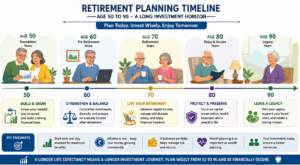
2. Retirement May Last 25–35 Years
Life expectancy has increased considerably.
If you retire at:
- 60 years
- and live until 85–90 years,
your retirement savings may need to last 25–30 years.
That is why your money should continue working even after retirement.
Illustration
Should You Stop Investing at Retirement?
Not necessarily.
Instead of stopping investments, you should:
- Reduce unnecessary risk
- Diversify your portfolio
- Maintain liquidity
- Continue earning returns
The objective changes from wealth creation to wealth preservation with moderate growth.
Benefits of Investing After Age 50
Financial Independence
Investments provide:
- Additional retirement income
- Emergency funds
- Financial confidence
Protection Against Medical Expenses
Healthcare costs increase rapidly with age.
Investments can help fund:
- Hospitalization
- Surgeries
- Long-term care
- Medicines
Leave a Financial Legacy
Proper investments can help you:
- Support your spouse
- Help children
- Fund grandchildren’s education
- Leave wealth for future generations
Best Investment Options After Age 50
1. Equity Mutual Funds
Suitable for investors with:
- 10–15-year investment horizon
- Moderate risk tolerance
Benefits:
- Inflation-beating returns
- Professional management
- SIP facility
2. Hybrid Mutual Funds
A combination of:
- Equity
- Debt
Benefits include:
- Lower volatility
- Stable returns
- Better risk management
3. Debt Mutual Funds
Ideal for conservative investors.
Advantages:
- Lower risk
- Better liquidity
- Predictable performance
4. Fixed Deposits
Suitable for:
- Emergency funds
- Capital protection
Benefits:
- Guaranteed returns
- Low risk
- Easy access
5. Government Savings Schemes
Popular options include:
- Senior Citizen Savings Scheme (SCSS)
- Pradhan Mantri Vaya Vandana Yojana (subject to current availability and government policy)
- Post Office Monthly Income Scheme
- National Savings Certificate (NSC)
These schemes provide relatively stable returns backed by government institutions.
6. National Pension System (NPS)
Suitable for:
- Retirement planning
- Tax benefits
- Long-term disciplined investing
7. Life Insurance Retirement Plans
Retirement-focused life insurance plans can provide:
- Regular income after retirement
- Financial protection for loved ones
- Tax benefits (subject to prevailing tax laws)
- Long-term financial discipline
For individuals looking for retirement income solutions, plans from PNB MetLife, such as retirement and pension-oriented offerings, may be worth evaluating based on your financial goals, age, and risk profile.
Asset Allocation After Age 50
A balanced asset allocation becomes increasingly important.
| Investment | Suggested Allocation* |
|---|---|
| Equity | 30–50% |
| Debt | 25–40% |
| Fixed Income | 15–25% |
| Cash | 5–10% |
*This is a general illustration. The appropriate allocation depends on your goals, income needs, risk tolerance, and overall financial situation.
Common Mistakes to Avoid
- Stopping investments completely
- Investing too aggressively
- Ignoring inflation
- Keeping all money in savings accounts
- Not reviewing investments annually
- Chasing unrealistic returns
- Ignoring tax planning
- Failing to nominate beneficiaries
Smart Investment Tips After Age 50
- Review your financial goals.
- Diversify investments.
- Maintain an emergency fund.
- Purchase adequate health insurance.
- Invest regularly.
- Rebalance your portfolio annually.
- Keep debt under control.
- Plan for retirement income.
Planning Discussion

Example
Suppose Mr. Sharma is 52 years old.
Current investment:
- ₹25 lakh
Monthly investment:
- ₹20,000
Expected return:
- 10% annually (illustrative only)
By age 65, he may accumulate substantially more than if he stopped investments at 52, depending on market performance and consistency of contributions. This example is for illustration and not a guarantee of returns.
How Life Insurance Fits Into Your Investment Strategy?
Life insurance and investing serve different purposes but can complement each other.
A comprehensive financial plan may include:
- A term insurance plan for family protection
- Retirement savings through pension or annuity products
- Mutual funds or other market-linked investments for growth
- Emergency savings for unexpected expenses
The right mix depends on your financial responsibilities, retirement goals, and risk appetite.
Suggested PNB MetLife Resources
For readers interested in protection and retirement planning, these resources may be useful:
- https://www.pnbmetlife.com/term-insurance.html
- https://www.pnbmetlife.com/retirement-and-pension-plans.html
- https://www.pnbmetlife.com/child-plans.html
Protect Your Family’s Future Today
Life is filled with dreams and responsibilities. Whether it’s securing your family’s future, planning your child’s education, building wealth, or enjoying a comfortable retirement, the right insurance plan can help you prepare for life’s uncertainties with confidence.
Choosing a suitable insurance policy today can provide financial security for your loved ones tomorrow. With expert guidance, you can select a plan that matches your goals, budget, and stage of life.

Why Speak With Me?
- Personalized financial needs analysis
- Guidance on Term Insurance, Savings Plans, Child Education Plans, Retirement Planning, and Wealth Creation
- Transparent explanations without complicated insurance jargon
- Continued assistance before and after policy issuance
- Dedicated customer support throughout your insurance journey
Let’s Build a Financially Secure Future Together
Every family is unique, and so are its financial goals. If you’re looking for expert guidance to choose an insurance plan that suits your needs, I’d be happy to assist you.
Contact
Nivrutti Khirolkar
Life Insurance Advisor – PNB MetLife
📞 Mobile: +91 9970300068, 📧 Email: ngkhirolkar@gmail.com
Schedule your personalized consultation today. There is no obligation—only guidance to help you make an informed decision.
“Life insurance is not just a policy—it is a promise to protect the people who matter most.”
Disclaimer
Insurance is the subject matter of solicitation. Life insurance products are subject to policy terms, conditions, and applicable regulatory guidelines. Please read the sales brochure and policy document carefully before purchasing.
Conclusion
Should You Continue Investing After Age 50? In many cases, yes. Rather than stopping, it is generally wiser to adapt your investment strategy to your changing goals and risk tolerance. A balanced mix of growth-oriented and income-generating investments can help protect against inflation, support retirement income, and provide greater financial confidence. Review your portfolio regularly, stay diversified, and seek professional advice when needed to make informed decisions.
Frequently Asked Questions (FAQs)
Is 50 too late to invest?
No. Many people have 20–35 years of life ahead after turning 50, making investing an important part of retirement planning.
Should I stop investing before retirement?
Usually no. You may reduce risk gradually rather than stop investing completely.
What is the safest investment after age 50?
Government-backed savings schemes, high-quality fixed-income investments, and bank fixed deposits are generally considered lower-risk options, though all investments involve some considerations.
Should I invest in mutual funds after 50?
Yes, if they align with your goals and risk tolerance. Hybrid and debt-oriented funds may suit many investors, while equity exposure can still be appropriate for long-term objectives.
Can investing after 50 reduce taxes?
Certain investments may offer tax benefits under applicable tax laws. Consult a qualified tax advisor to understand what applies to your situation.
Reference: https://en.wikipedia.org/wiki/Investment