
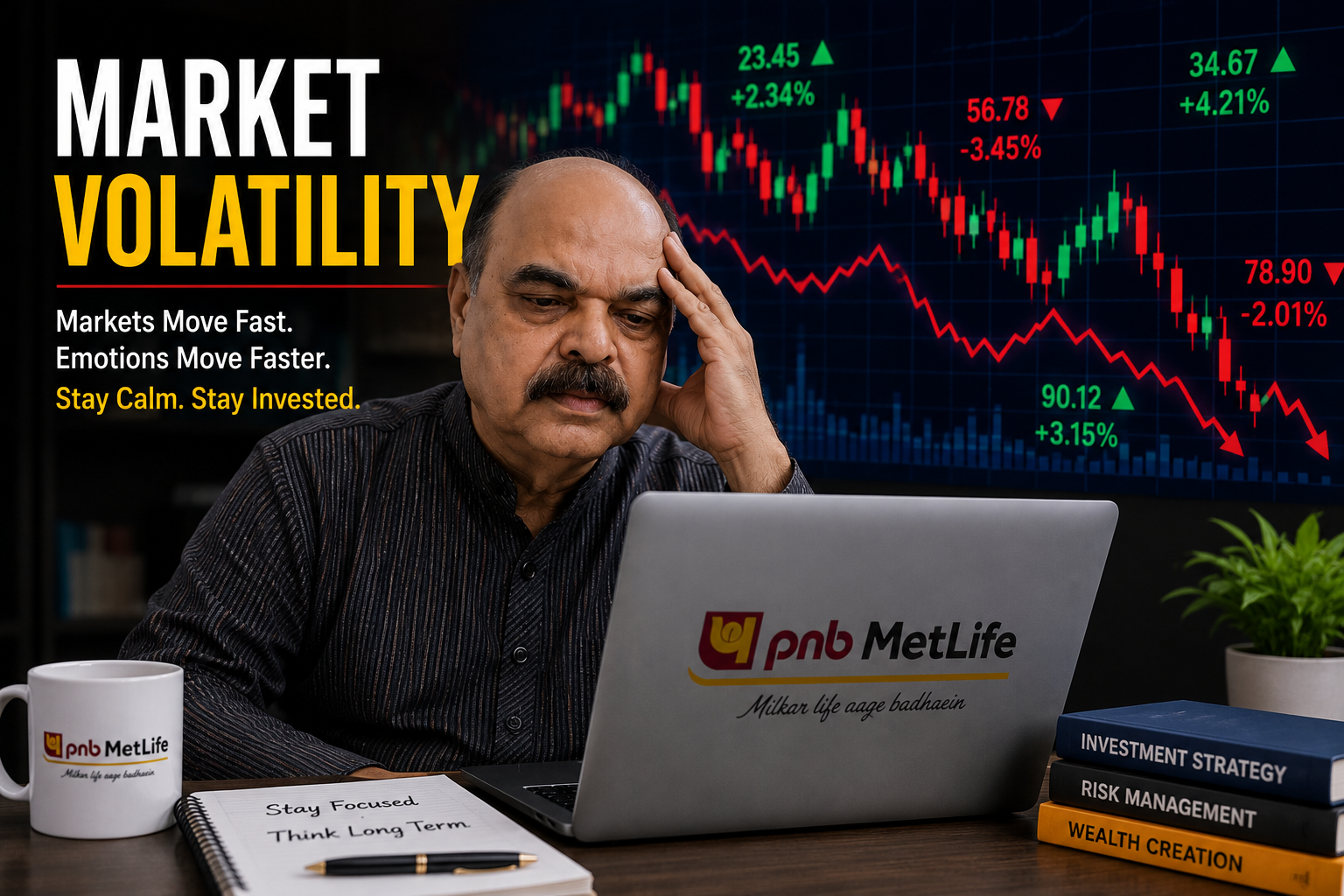
Market volatility (बाज़ार में उतार-चढ़ाव) is one of the most common terms you hear whenever the stock market rises sharply or falls suddenly. Many investors, especially beginners, become worried when markets fluctuate. However, market volatility is a normal part of investing. In finance, volatility (usually denoted by “σ”) is the degree of variation of a trading price series over time, usually measured by the standard deviation of logarithmic returns.
Historic volatility measures a time series of past market prices. Implied volatility looks forward in time, being derived from the market price of a market-traded derivative (in particular, an option).
Understanding market volatility can help you make better financial decisions, avoid emotional investing, and build long-term wealth.
In this guide, you’ll learn everything about market volatility in simple English, including its causes, effects, advantages, disadvantages, and strategies to protect your investments.

What Is Market Volatility?
Market volatility refers to the speed and size of changes in the prices of financial assets like:
- Stocks
- Mutual Funds
- ETFs
- Bonds
- Commodities
- Currencies
When prices move sharply upward or downward within a short period, the market is considered volatile.
Example
Suppose a company’s stock price is:
- Monday: ₹1,000
- Tuesday: ₹920
- Wednesday: ₹980
- Thursday: ₹870
- Friday: ₹1,030
These rapid changes indicate high market volatility.
Why Does Market Volatility Happen?
Many factors cause market fluctuations.
1. Economic News
Examples include:
- Inflation
- GDP growth
- Employment reports
- Interest rates
Positive news usually pushes markets upward, while negative news can cause declines.
2. Global Events
Unexpected events such as:
- Wars
- Natural disasters
- Pandemics
- Political conflicts
often create uncertainty.
3. Interest Rate Changes
When central banks increase interest rates:
- Borrowing becomes expensive.
- Companies may earn lower profits.
- Investors become cautious.
4. Company Earnings
Strong profits generally increase stock prices, while poor results can lead to declines.
5. Investor Emotions
Markets are heavily influenced by:
- Fear
- Greed
- Optimism
- Panic
Emotional buying and selling can increase volatility.
Types of Market Volatility
Historical Volatility
Measures how much prices changed in the past.
Example
A stock that moved between ₹900 and ₹1,200 several times during the year has high historical volatility.
Implied Volatility
Represents what investors expect future volatility to be.
It is commonly used in options trading.
Is Market Volatility Good or Bad?
The answer depends on your investment goals.
Advantages
- Creates buying opportunities.
- Helps long-term investors accumulate quality assets at lower prices.
- Can generate higher returns over time.
Disadvantages
- Causes emotional stress.
- Short-term losses can be significant.
- Panic selling often leads to permanent losses.
How Market Volatility Affects Different Investors
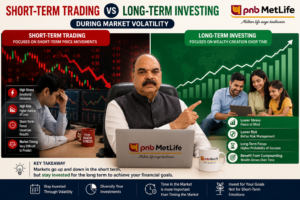
Short-Term Traders
They often experience larger gains or losses because they rely on daily price movements.
Long-Term Investors
They generally benefit by staying invested through market cycles.
Retired Investors
They may prefer lower-risk investments because preserving capital becomes more important.
Signs That the Market Is Becoming Volatile
Watch for:
- Large daily market movements
- Increased trading volume
- Breaking economic news
- Sudden interest rate announcements
- Geopolitical tensions
- High inflation
How to Invest During Market Volatility
1. Stay Calm
Avoid making investment decisions based solely on fear.
2. Think Long Term
History shows that markets have generally recovered after major downturns.
3. Diversify Your Investments
Don’t put all your money into one investment.
Consider a mix of:
- Equity
- Debt
- Gold
- Fixed-income products
- Cash reserves
4. Continue SIP Investments
If you invest through a Systematic Investment Plan (SIP), continuing during market declines may allow you to buy more units at lower prices.
5. Maintain an Emergency Fund
Keeping several months of essential expenses in readily accessible savings can reduce the need to sell investments during market downturns.

Common Mistakes During Market Volatility
Avoid these mistakes:
- Panic selling
- Investing without research
- Trying to time the market perfectly
- Ignoring diversification
- Following rumors
- Borrowing money to invest
- Checking portfolio every hour
Benefits of Staying Invested
Long-term investors often benefit because:
- Markets tend to recover over time.
- Dividends may continue even during downturns.
- Compounding works best over longer periods.
- Quality businesses often grow despite temporary volatility.
Market Volatility vs Market Crash
| Market Volatility | Market Crash |
|---|---|
| Normal price fluctuations | Severe market decline |
| Temporary | May take longer to recover |
| Common | Less frequent |
| Can move both up and down | Mostly sharp downward movement |
How Beginners Should Handle Market Volatility
If you’re new to investing:
- Learn the basics before investing.
- Start with diversified investment options.
- Invest regularly rather than trying to predict market highs and lows.
- Review your financial goals periodically.
- Consult a qualified financial advisor if needed.
Role of Financial Planning During Volatile Markets
A good financial plan helps you:
- Stay disciplined.
- Invest according to your goals.
- Manage risk.
- Avoid emotional decisions.
- Build long-term wealth.
Key Takeaways
- Market volatility is a normal part of investing.
- Economic events and investor sentiment often drive market movements.
- Long-term investing can help manage short-term fluctuations.
- Diversification and disciplined investing are important risk-management strategies.
- Avoid making decisions based on fear or rumors.
Suggested External Reading
For readers interested in financial protection and long-term planning, consider exploring educational resources on:
Protect Your Family’s Future Today
Life is filled with dreams and responsibilities. Whether it’s securing your family’s future, planning your child’s education, building wealth, or enjoying a comfortable retirement, the right insurance plan can help you prepare for life’s uncertainties with confidence.
Choosing a suitable insurance policy today can provide financial security for your loved ones tomorrow. With expert guidance, you can select a plan that matches your goals, budget, and stage of life.

Why Speak With Me?
- Personalized financial needs analysis
- Guidance on Term Insurance, Savings Plans, Child Education Plans, Retirement Planning, and Wealth Creation
- Transparent explanations without complicated insurance jargon
- Continued assistance before and after policy issuance
- Dedicated customer support throughout your insurance journey
Let’s Build a Financially Secure Future Together
Every family is unique, and so are its financial goals. If you’re looking for expert guidance to choose an insurance plan that suits your needs, I’d be happy to assist you.
Contact
Nivrutti Khirolkar
Life Insurance Advisor – PNB MetLife
📞 Mobile: +91 9970300068, 📧 Email: ngkhirolkar@gmail.com
Schedule your personalized consultation today. There is no obligation—only guidance to help you make an informed decision.
“Life insurance is not just a policy—it is a promise to protect the people who matter most.”
Disclaimer
Insurance is the subject matter of solicitation. Life insurance products are subject to policy terms, conditions, and applicable regulatory guidelines. Please read the sales brochure and policy document carefully before purchasing.
Conclusion
Market volatility should not always be viewed as a threat. It is a natural characteristic of financial markets and can present both opportunities and risks. Investors who understand volatility, maintain diversified portfolios, and stay focused on long-term goals are generally better positioned to navigate changing market conditions. Rather than reacting emotionally to every market movement, build a sound financial plan and review it regularly to stay on track toward your objectives
Frequently Asked Questions (FAQs)
What is market volatility?
It refers to the rate at which investment prices rise or fall over time.
Is market volatility normal?
Yes. Price fluctuations are a natural part of financial markets.
Should I stop investing during market volatility?
Not necessarily. Many long-term investors continue investing according to their financial plan rather than reacting to short-term market movements.
Does volatility always mean losses?
No. Volatility means prices can move significantly in either direction, resulting in both gains and losses.
Is diversification helpful?
Diversification can help reduce the impact of poor performance in any single investment, though it does not eliminate risk.
Reference: https://en.wikipedia.org/wiki/Volatility_(finance)