
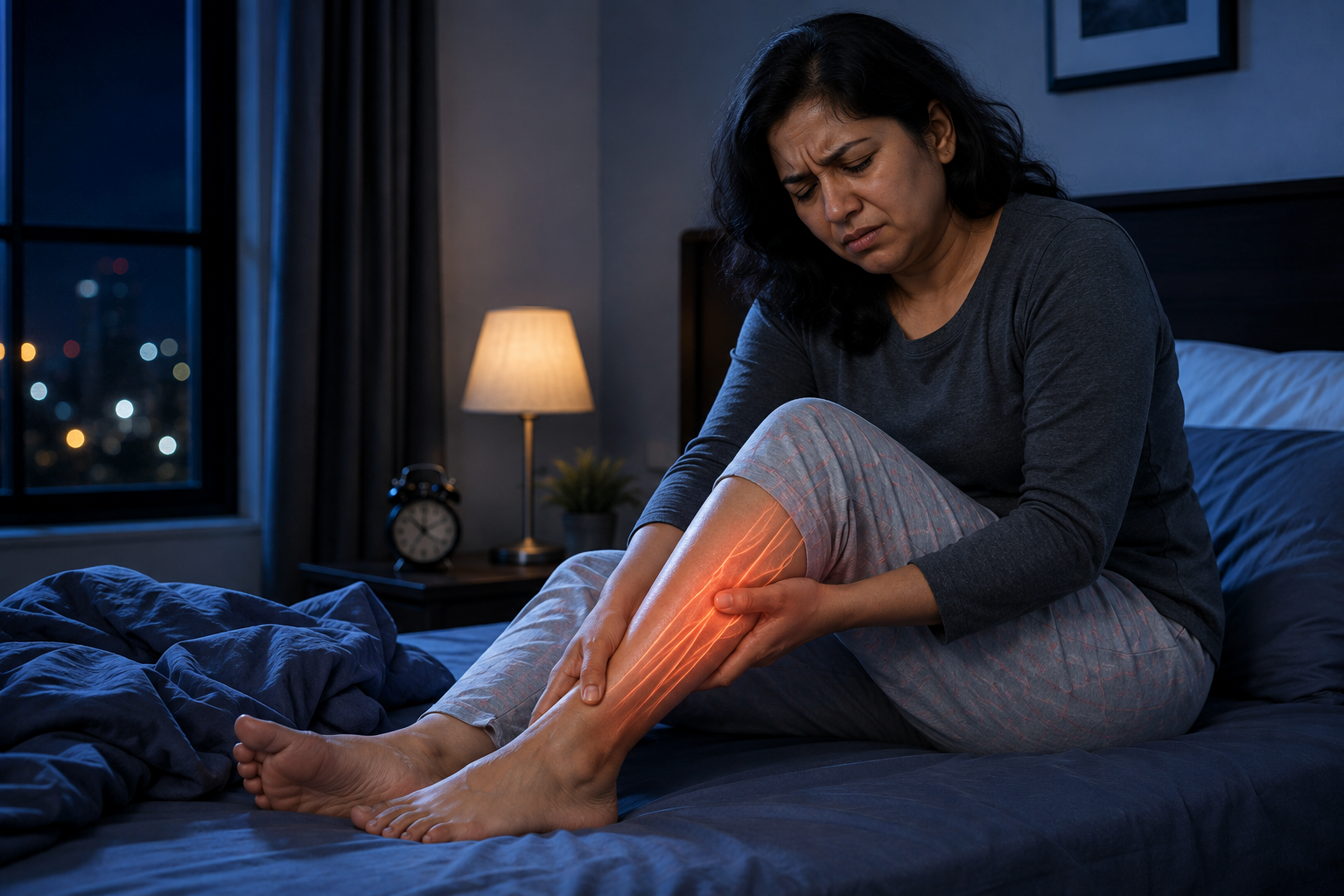
Restless Legs at Night [रात में पैरों में बेचैनी], also known as Restless Legs Syndrome, and Willis–Ekbom disease (WED), is a neurological disorder, usually chronic, that causes an overwhelming urge to move one’s legs. People often feel an unpleasant sensation in their legs that temporarily improves with movement. This feeling is often described as aching, tingling, or crawling. Occasionally, arms may also be affected. The feelings generally happen when at rest and therefore can make it hard to sleep. Sleep disruption may leave people with RLS sleepy during the day, with low energy, and irritable or depressed. Additionally, many have limb twitching during sleep, a condition known as periodic limb movement disorder (PLMD). RLS is not the same as habitual foot-tapping or leg-rocking.
Restless Legs at Night: Causes, Symptoms, Treatment and Relief Tips
Restless Legs at Night is a neurological condition that creates an almost irresistible urge to move the legs, often because of uncomfortable sensations such as crawling, pulling, aching, tingling, or throbbing. The symptoms commonly become more noticeable during periods of rest and tend to be worse in the evening or at night. Movement such as walking or stretching may provide temporary relief.
For some people, RLS is an occasional nuisance. For others, it can seriously disturb sleep and affect daytime energy, concentration, mood, and quality of life. Fortunately, RLS can often be managed with appropriate evaluation, lifestyle changes, and, when necessary, medical treatment.
Medical disclaimer: This article is intended for general educational purposes and should not replace professional medical advice, diagnosis or treatment. If your symptoms are persistent, severe or interfering with sleep and daily activities, consult a qualified healthcare professional.
What Is Restless Legs at Night?
Restless Legs at Night or Restless Legs Syndrome (RLS), also known as Willis-Ekbom disease, is a neurological and sleep-related movement disorder. Its defining feature is a strong urge to move the legs, generally accompanied by unpleasant sensations.
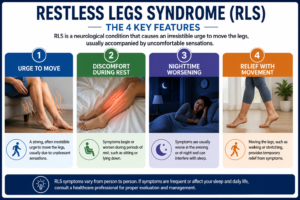
Unlike ordinary muscle fatigue, the discomfort of RLS tends to follow a recognizable pattern:
- It begins or becomes worse when you are resting.
- Sitting or lying down can trigger symptoms.
- Symptoms are usually worse during the evening or night.
- Walking, stretching, or moving the legs often provides temporary relief.
- The symptoms may interfere with falling asleep or staying asleep.
Restless Legs at Night or RLS can occur at any age, although it becomes more common with increasing age. It is also more common in women. In some families, RLS appears to have a genetic component, particularly when symptoms begin at a younger age.

What Does Restless Legs at Night Feel Like?
Restless Legs at Night or RLS symptoms can be difficult to describe because they are not always the same from one person to another.
People may describe the sensations as:
- Crawling
- Creeping
- Pulling
- Tingling
- Throbbing
- Aching
- Itching
- Burning or electric-like sensations
The discomfort is generally felt inside the legs rather than on the surface of the skin. The symptoms can affect both legs and, less commonly, the arms.
One of the most important clues is the relationship between rest, movement and time of day.
For example, someone may feel relatively comfortable while walking during the day but develop an intense urge to move their legs after lying down in bed at night. Getting up and walking around may temporarily make the sensation better.
Common Symptoms of Restless Legs at Night
The main symptoms of RLS include:
An irresistible urge to move the legs
The person feels that they simply must move their legs to obtain relief.
Uncomfortable sensations
Crawling, pulling, aching, tingling or similar sensations may accompany the urge to move.
Symptoms triggered by rest
Sitting quietly, travelling in a car or airplane, watching television or lying in bed may bring on symptoms.
Relief through movement
Walking, stretching, changing position or moving the legs may reduce the symptoms temporarily.
Symptoms that worsen at night
RLS characteristically becomes more troublesome during the evening or nighttime.
Sleep disruption
Persistent symptoms can make it difficult to fall asleep or remain asleep. Daytime tiredness may follow.
Restless Legs at Night or RLS and Sleep
Some people with RLS also experience periodic limb movements during sleep, in which the legs repeatedly twitch or jerk while the person is asleep. These movements can further affect sleep quality.
What Causes Restless Legs at Night?
The exact cause of Restless Legs at Night or RLS is not always known. Research suggests that brain iron regulation and pathways involved in movement may play important roles.
Several factors and medical conditions are associated with RLS.
Iron deficiency
Low iron levels can cause or worsen RLS. Importantly, iron status may be relevant even when a person does not think they have anemia. Current clinical guidance places considerable emphasis on evaluating iron status in people with RLS.
Family history
RLS can run in families. People who develop symptoms at a younger age are particularly likely to have a family history.
Pregnancy
RLS may develop or become worse during pregnancy, particularly later in pregnancy. Symptoms often improve after delivery.
Kidney disease
Kidney failure and associated changes in iron levels and body chemistry can be linked with RLS.
Peripheral neuropathy
Nerve damage, including neuropathy associated with conditions such as diabetes, may occur alongside RLS-like symptoms and should be considered when evaluating leg discomfort.
Other neurological or medical conditions
Certain spinal cord conditions and Parkinson’s disease have also been associated with RLS.
Factors That May Make Restless Legs at Night Worse
Certain habits or medications may aggravate symptoms in some individuals.
Potential triggers include:
- Excessive caffeine
- Alcohol
- Tobacco
- Sleep deprivation
- Very strenuous or late-evening exercise
- Prolonged inactivity
- Certain medications
Some antidepressants, antipsychotic medicines, anti-nausea medicines and certain cold or allergy medicines may worsen RLS in some people. Do not stop a prescribed medicine on your own. Discuss possible alternatives with your healthcare professional.
How Is Restless Legs at Night Diagnosed?
There is no single blood test or imaging scan that independently confirms RLS. Diagnosis is primarily based on the person’s symptoms and medical history.
Healthcare professionals generally look for a characteristic pattern:
- A strong urge to move the legs, usually accompanied by discomfort.
- Symptoms that begin or become worse during rest.
- Improvement with movement.
- Symptoms that are predominantly worse in the evening or at night.
- Symptoms that cannot be better explained by another medical condition.
A physical or neurological examination may also be performed.
Blood Tests
Blood tests, especially those evaluating iron status, can help identify factors contributing to RLS and guide treatment. Current sleep-medicine guidance emphasizes regular assessment of iron measures in people with RLS.
A sleep study is not usually necessary to diagnose RLS, although a healthcare professional may recommend one when another sleep disorder, such as sleep apnea, is suspected.
Restless Legs at Night Treatment
Treatment depends on the severity of symptoms, possible underlying causes, and the individual’s overall health.
Treat an underlying cause
If iron deficiency is contributing to RLS, correcting the deficiency may improve symptoms.
However, do not start iron supplements simply because you suspect you have RLS. Iron supplementation should be based on appropriate testing and professional medical guidance because unnecessary iron can also be harmful.
Lifestyle changes
For people with mild or occasional symptoms, lifestyle measures may provide useful relief.
Helpful strategies can include:
- Maintaining a regular sleep schedule
- Getting adequate sleep
- Moderate regular exercise
- Stretching the legs
- Gentle leg massage
- Taking a warm bath
- Trying warm or cool packs
- Reducing caffeine
- Limiting alcohol
- Avoiding tobacco
- Managing stress
Regular moderate exercise may help, although excessive exercise or exercising too close to bedtime can worsen symptoms for some people.
Prescription medicines
When lifestyle measures are insufficient, a healthcare professional may recommend medication.
Current treatment approaches commonly include medicines that affect calcium channels, such as gabapentin, gabapentin enacarbil or pregabalin, depending on the individual situation. These medicines can have side effects including dizziness, balance problems, mental fog or weight gain.
Dopamine-related medicines such as pramipexole, ropinirole and rotigotine can also reduce symptoms in some people, but long-term use can lead to augmentation, in which symptoms become worse, start earlier in the day or spread to other areas. For this reason, treatment decisions should be individualized and monitored by a healthcare professional.
For difficult cases that do not respond adequately to other approaches, specialists may consider additional treatments, including carefully selected opioid therapy. These medicines carry important risks and require medical supervision.
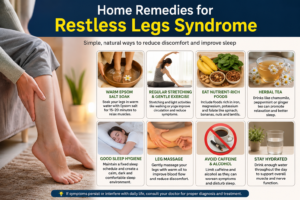
Home Remedies and Relief Tips for Restless Legs at Night
While home measures do not cure every case of RLS, they may help reduce symptoms.
Gentle stretching
Stretching the calves, thighs, and hamstrings before bedtime may help some people.
Walking
If symptoms begin while you are lying down, getting up for a short walk may provide temporary relief.
Massage
Gentle massage can relax the legs and may make nighttime symptoms easier to tolerate.
Warm bath
A warm bath before bedtime can be soothing and may help create a relaxing nighttime routine.
Heat or cold
Some people find relief from warm or cool packs applied to the legs.
Improve sleep habits
Try to go to bed and wake up at approximately the same time every day. Keep the bedroom quiet, comfortable and suitable for sleep.
Reduce caffeine
Coffee, tea, chocolate and some soft drinks contain caffeine. If you suspect caffeine is triggering your symptoms, reducing intake for a period may help determine whether there is a connection.
Can Diet Help Restless Legs at Night?
Diet alone should not be considered a cure for RLS, but a balanced diet can support overall health.
Foods containing iron include:
- Lentils
- Beans
- Chickpeas
- Spinach and other leafy greens
- Nuts and seeds
- Fortified cereals
- Lean meats
However, eating iron-rich foods does not necessarily mean that supplementation is required. If iron deficiency is suspected, appropriate blood testing and medical advice are important.
A balanced diet should also provide adequate protein, vitamins, and minerals while limiting excessive caffeine and alcohol if these appear to trigger symptoms.
When Should You See a Doctor?
Consider consulting a healthcare professional if:
- You frequently feel an irresistible need to move your legs.
- Symptoms repeatedly disturb your sleep.
- You experience significant daytime tiredness.
- Symptoms are becoming more frequent or severe.
- You have symptoms during pregnancy.
- You have kidney disease, diabetes, neuropathy or another chronic condition.
- You suspect an iron deficiency.
- You have started a medicine that seems to make the symptoms worse.
Persistent sleep disruption should not simply be dismissed as a minor inconvenience. Proper assessment can help distinguish RLS from other conditions that may cause leg discomfort or nighttime movements.
Restless Legs at Night vs. Ordinary Leg Cramps: What Is the Difference?
Restless Legs Syndrome is sometimes confused with muscle cramps.
RLS: The defining feature is an urge to move, usually associated with unpleasant sensations that occur during rest and improve with movement.
Leg cramps: These are typically sudden, painful involuntary muscle contractions. They may occur at night but do not have the same characteristic pattern of an irresistible urge to move relieved by activity.
Other conditions, including peripheral neuropathy and circulation problems, can also produce leg symptoms. This is why persistent or unusual symptoms deserve professional evaluation.
Can Restless Legs at Night Be Cured?
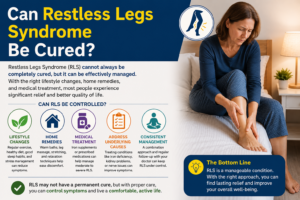
There is currently no universal cure for RLS, particularly when it is a chronic condition with no identifiable underlying cause. However, symptoms can often be managed effectively.
For some people, identifying and treating an underlying contributor such as iron deficiency can substantially improve symptoms. Others benefit from lifestyle measures, medication, or a combination of approaches.
The goal is not simply to suppress symptoms temporarily but to identify contributing factors and develop a sustainable treatment plan.
Conclusion
Restless Legs at Night or Restless Legs Syndrome can be frustrating, especially when the urge to move your legs appears just when you are trying to relax or sleep. Recognizing the characteristic pattern—symptoms during rest, worsening in the evening or at night, and relief through movement—is an important first step.
The good news is that RLS is manageable for many people. Identifying possible contributors such as iron deficiency, reviewing medications, improving sleep habits, maintaining moderate physical activity, and using appropriate medical treatment can make a meaningful difference.
If restless legs are repeatedly disturbing your sleep or affecting your daily life, don’t simply put up with the discomfort. Speak with a qualified healthcare professional for an appropriate evaluation and individualized treatment plan.
Your legs may be asking you to move—but the right diagnosis and management plan can help you get back to restful nights.
Frequently Asked Questions About Restless Legs Syndrome
Is Restless Legs at Night a serious disease?
RLS is generally not considered life-threatening, but significant symptoms can interfere with sleep, daytime functioning, and quality of life.
Does walking help Restless Legs at Night or RLS?
Movement such as walking or stretching commonly provides temporary relief from RLS symptoms.
Is Restless Legs at Night or RLS caused by low iron?
Iron deficiency can cause or worsen RLS in some people. A healthcare professional can assess iron status and determine whether treatment is appropriate.
Can Restless Legs at Night or RLS affect sleep?
Yes. RLS frequently makes it difficult to fall asleep or remain asleep and may contribute to daytime tiredness.
Does caffeine make Restless Legs at Night or RLS worse?
Caffeine can aggravate symptoms in some people. A trial of reducing caffeine may help determine whether it is a personal trigger.
Should I take iron supplements for Restless Legs at Night or RLS?
Not without appropriate testing and professional advice. Iron treatment should be guided by iron measurements and medical supervision.
Is Restless Legs at Night hereditary?
It can run in families, particularly when symptoms begin at a younger age.