
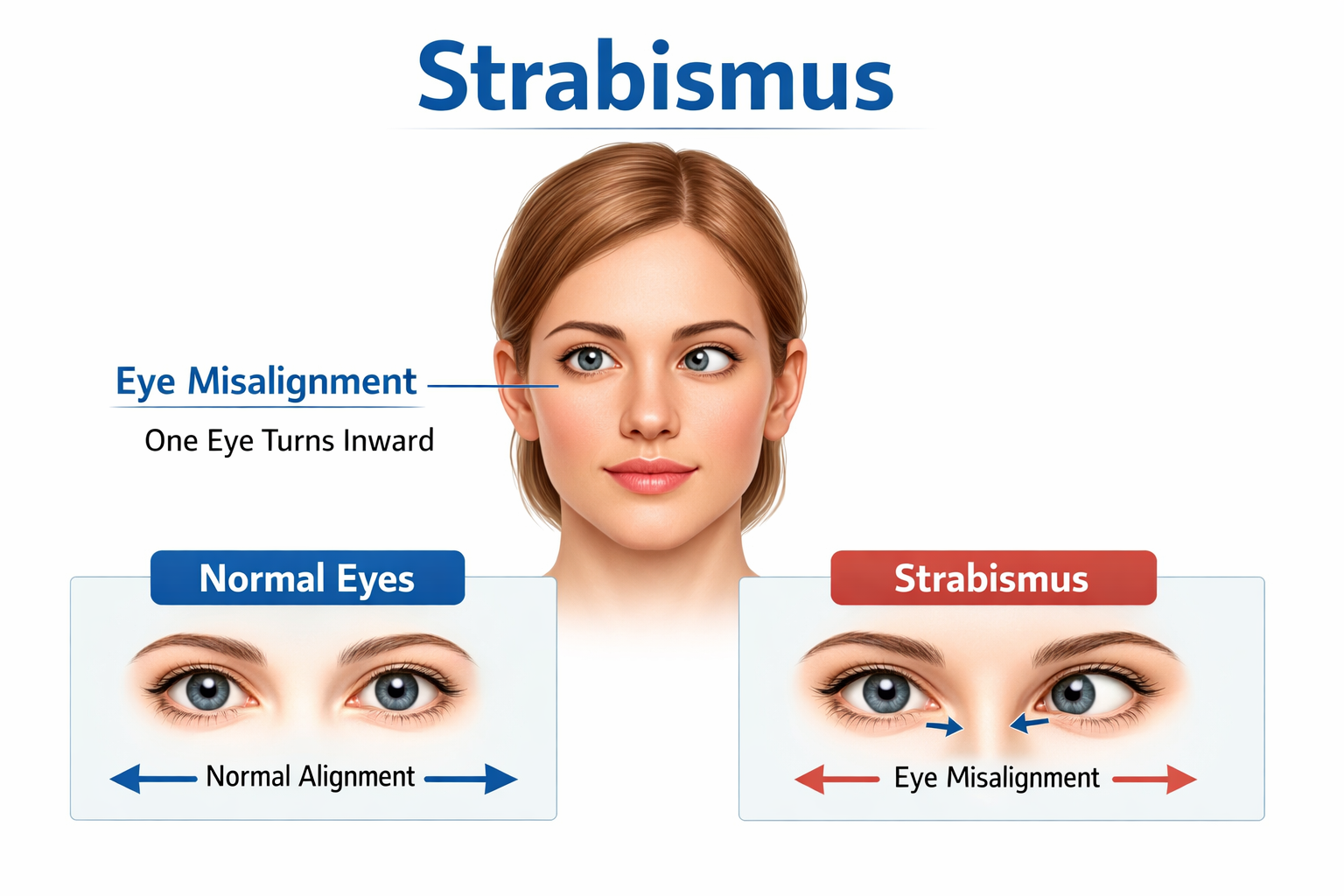
Strabismus (टेढ़ा दिखाई देना) is an eye disorder in which the eyes do not properly align with each other when looking at an object. The eye that is pointed at an object can alternate. The condition may be present occasionally or constantly. If present for a substantial portion of childhood, it may result in amblyopia (“lazy eyes”) and loss of depth perception. If the onset is during adulthood, it is more likely to result in double vision. Strabismus can occur due to muscle dysfunction (e.g., myasthenia gravis), farsightedness, problems in the brain, trauma, or infections. Risk factors include premature birth, cerebral palsy, and a family history of the condition. Types include esotropia, where the eyes are crossed (“cross-eyed”); exotropia, where the eyes diverge (“lazy-eyed” or “wall-eyed”); and hypertropia or hypotropia, where they are vertically misaligned.
Strabismus: Complete Guide to Causes, Symptoms, Treatment & Prevention
It, commonly known as crossed eyes or squint, is a condition in which the eyes do not align properly when looking at an object. Normally, both eyes move together and focus on the same point, allowing the brain to combine the images from each eye into a single clear image. However, in strabismus, one eye may look straight while the other turns inward, outward, upward, or downward.
This condition can affect children as well as adults and may lead to visual problems such as double vision, poor depth perception, and even permanent vision loss if left untreated. Fortunately, with early diagnosis and proper treatment, most people with strabismus can achieve better eye alignment and improved vision.
What is Strabismus?
It is a visual disorder in which both eyes do not look in the same direction at the same time. One eye may focus on the target object, while the other deviates in a different direction.

The misalignment occurs because the eye muscles or nerves controlling eye movements do not work together properly. The brain receives two different visual images, which can result in confusion or double vision.
If the brain begins ignoring signals from the weaker eye, it may lead to amblyopia (lazy eye), a condition that causes reduced vision in the affected eye.
Strabismus may be:
-
Constant – present all the time
-
Intermittent – appears occasionally, especially when tired or focusing intensely
Early detection and treatment are essential, especially in children, to prevent long-term vision complications.
Classifications (Types) of Strabismus
It is classified based on the direction of eye deviation and how frequently it occurs.
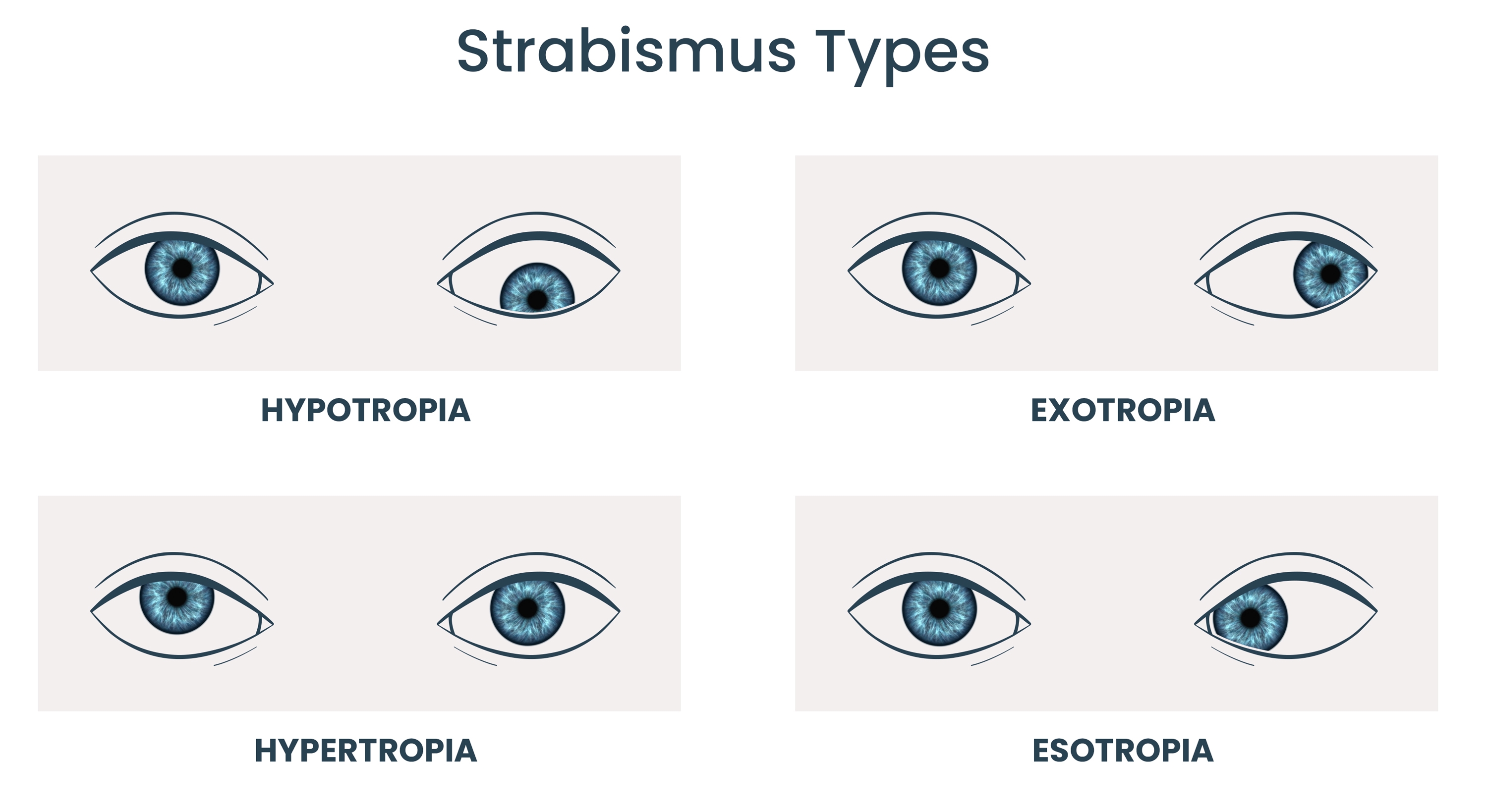
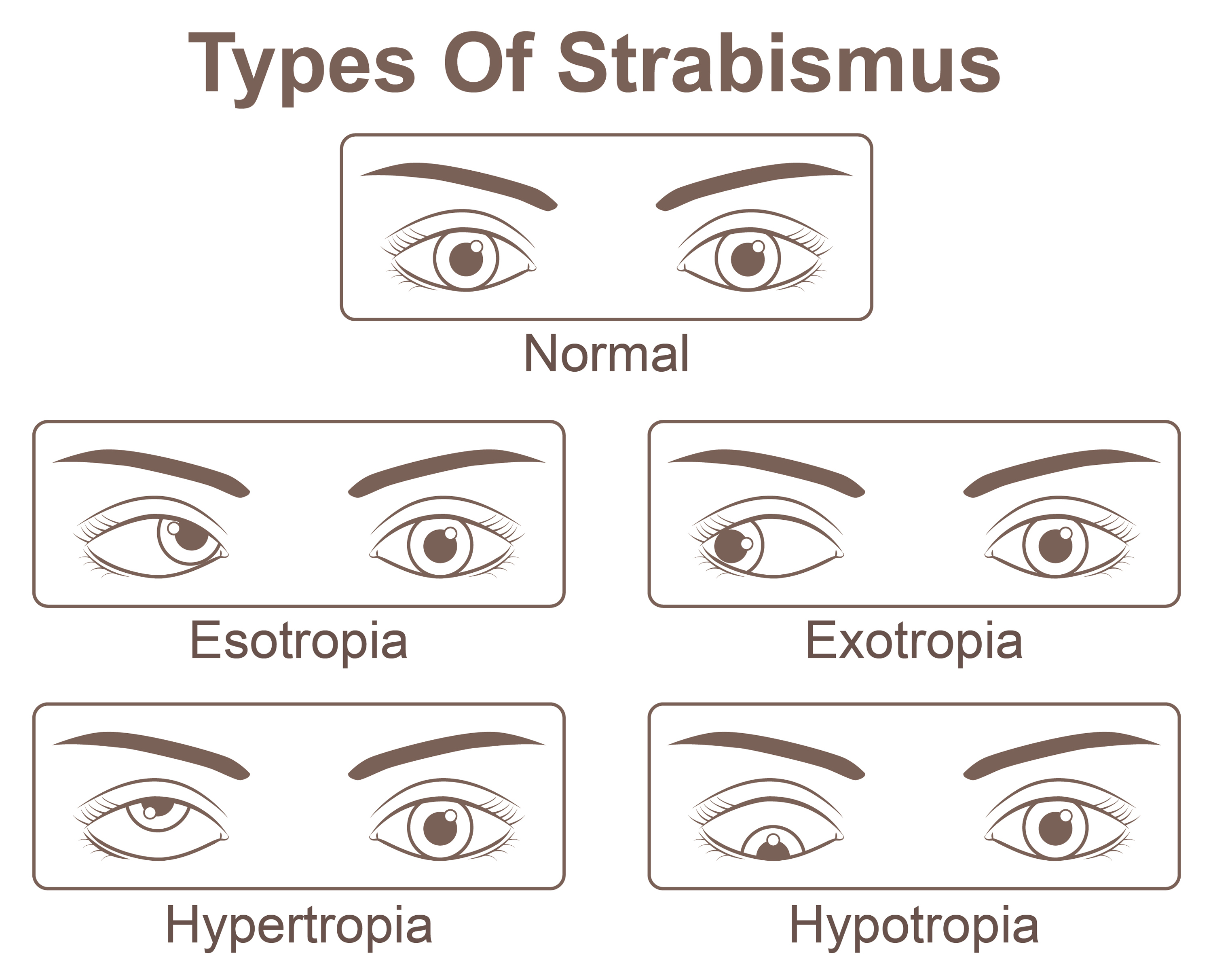
1. Based on Direction of Eye Deviation
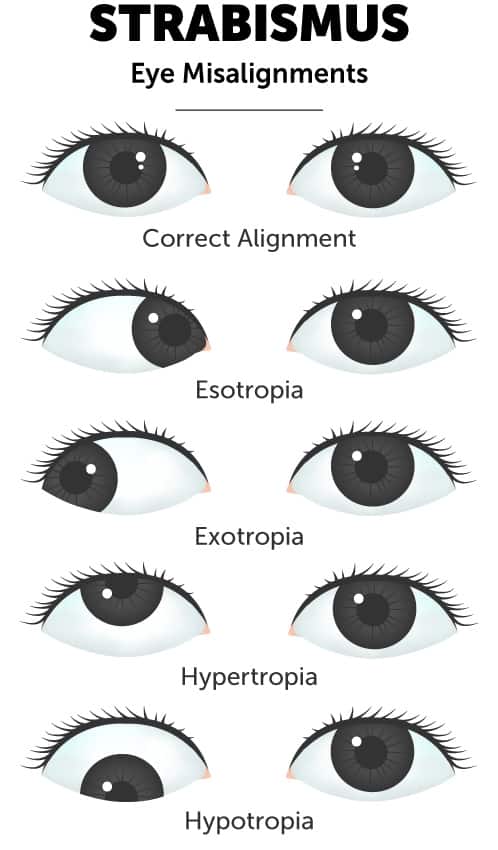
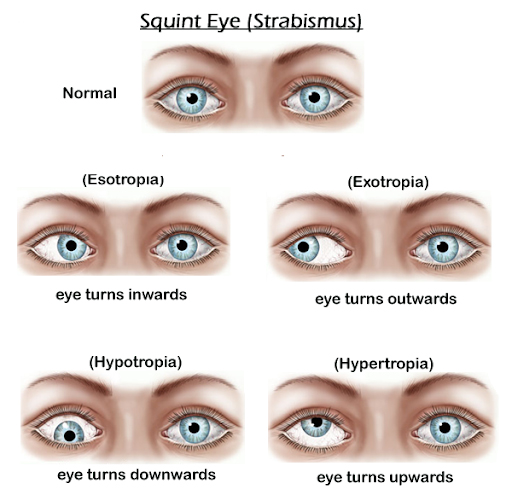
Esotropia
One eye turns inward toward the nose. This is the most common type of strabismus in children.
Exotropia
One eye turns outward away from the nose. It may occur occasionally when the person is tired or focusing on distant objects.
Hypertropia
One eye turns upward relative to the other eye.
Hypotropia
One eye turns downward.
2. Based on Frequency
Constant Strabismus
The eye misalignment is always present.
Intermittent Strabismus
The deviation occurs only sometimes, such as during fatigue or illness.
3. Based on Eye Movement
Comitant Strabismus
The angle of eye deviation remains the same in all directions of gaze.
Incomitant Strabismus
The deviation changes depending on the direction the eyes are looking.
Risk Factors of Strabismus
Several factors increase the likelihood of developing strabismus.
Family History
Genetics plays a significant role. If a family member has strabismus, the risk increases.
Refractive Errors
Uncorrected vision problems such as:
-
Hyperopia (farsightedness)
-
Myopia (nearsightedness)
Neurological Conditions
Certain neurological disorders can affect eye muscles.
Examples include:
-
Brain injuries
Premature Birth
Babies born prematurely have a higher risk of eye disorders.
Eye Diseases
Conditions such as cataracts, retinal disorders, or eye injuries can lead to misalignment.
Symptoms of Strabismus
The symptoms may vary depending on the severity and type of strabismus.
Common symptoms include:
Visible Eye Misalignment
One eye appears to look in a different direction than the other.
Double Vision
Seeing two images of a single object.
Poor Depth Perception
Difficulty judging the distance between objects.
Squinting or Closing One Eye
Especially in bright sunlight.
Head Tilting
Some individuals tilt or turn their head to focus properly.
Eye Strain or Fatigue
Eyes may feel tired after reading or screen use.
Difficulty Focusing
Problems maintaining visual focus on objects.
Children may not always complain of symptoms, so parents should watch for signs of eye misalignment.
Causes of Strabismus
Strabismus occurs when there is a lack of coordination between the eye muscles responsible for eye movement.
Muscle Imbalance
Six muscles control each eye. If these muscles are not balanced, the eyes may point in different directions.
Brain Control Problems
The brain coordinates signals that control eye movement. Any disturbance in these signals can cause misalignment.
Nerve Disorders
Damage to nerves controlling eye muscles may lead to strabismus.
Refractive Errors
Severe farsightedness may cause children to cross their eyes while trying to focus.
Injury or Trauma
Head injuries or eye injuries can disrupt eye muscle control.
Medical Conditions
Certain diseases affecting the nervous system may contribute to strabismus.
Diagnosis of Strabismus
Early diagnosis is crucial for preventing complications such as amblyopia and permanent vision loss. An ophthalmologist (an eye specialist) performs several tests.
Visual Acuity Test
Measures how clearly each eye can see.
Cover Test
One eye is covered while the doctor observes how the other eye moves.
Corneal Light Reflex Test
Checks how light reflects from the cornea to detect eye misalignment.
Refraction Test
Determines whether glasses are needed.
Eye Muscle Movement Test
Evaluates how well the eye muscles function. Children should undergo regular vision screenings to detect strabismus early.
Prevention of Strabismus
Although some causes cannot be prevented, certain measures may reduce risk.
Regular Eye Exams
Routine eye checkups help detect early problems.
Correct Vision Problems
Use glasses or contact lenses when needed.
Protect Eyes from Injury
Wearing protective eyewear during sports or hazardous activities.
Early Treatment
Treating refractive errors or eye conditions promptly.
Healthy Lifestyle
Proper nutrition and eye care support overall eye health.
Treatment for Strabismus
Treatment depends on the type, severity, and cause of strabismus.
Eyeglasses or Contact Lenses
Correcting refractive errors can sometimes align the eyes.
Eye Patching
The stronger eye is covered to strengthen the weaker eye.
Prism Lenses
Special lenses help align the visual images seen by both eyes.
Vision Therapy
Eye exercises improve coordination between eye muscles.
Botox Injections
Botulinum toxin may temporarily weaken certain eye muscles to improve alignment.
Strabismus Surgery
If other treatments fail, surgery may be recommended. During surgery, doctors tighten or reposition eye muscles to correct alignment.
Surgery is often successful and may significantly improve both vision and appearance.
Ayurveda Treatment for Strabismus
Ayurveda focuses on balancing body energies and improving eye health naturally. Some traditional therapies include:
Netra Tarpana
A treatment in which medicated ghee is placed around the eyes to nourish eye tissues.
Nasya Therapy
Herbal oils are administered through the nose to improve nerve function.
Herbal Remedies
Certain Ayurvedic herbs may support eye health.
Examples include:
-
Triphala
-
Amla (Indian gooseberry)
-
Yashtimadhu (licorice)
Eye Cleansing
Herbal eye washes using Triphala water are sometimes recommended. However, Ayurvedic treatments should always be done under professional guidance.
Home Remedies for Strabismus
Home remedies cannot cure it completely, but may help support eye health.
Eye Exercises
Simple eye exercises can improve coordination.
Examples include:
-
Pencil push-ups
-
Focusing exercises
-
Eye tracking exercises
Adequate Sleep
Proper rest helps reduce eye strain.
Balanced Diet
Foods rich in vitamins support eye health. Important nutrients include:
-
Lutein and zeaxanthin
Foods beneficial for eye health include:
-
Carrots
-
Spinach
-
Citrus fruits
-
Nuts and seeds
Limit Screen Time
Reducing excessive screen use prevents eye strain.
Proper Lighting
Ensure adequate lighting while reading or working.
Complications of Untreated Strabismus
If left untreated, strabismus may lead to serious complications.
Amblyopia (Lazy Eye)
The brain ignores the weaker eye, causing vision loss.
Double Vision
Seeing two images simultaneously.
Poor Depth Perception
Difficulty judging distances.
Vision Loss
Permanent visual impairment may occur.
Psychological Effects
Visible eye misalignment may affect self-confidence.
Early treatment significantly reduces these risks.
Conclusion
Strabismus is a common eye disorder characterized by misalignment of the eyes, which can affect both vision and appearance. The condition may arise from muscle imbalance, nerve problems, refractive errors, or underlying medical conditions.
Early diagnosis is crucial because an untreated one can lead to amblyopia, double vision, and poor depth perception. Modern medical treatments, such as glasses, vision therapy, and surgery, can effectively correct eye alignment in many cases.
Along with medical treatment, maintaining healthy lifestyle habits, regular eye checkups, and proper nutrition can help protect vision. When detected early and managed properly, individuals with it can lead a normal life with healthy and functional vision.
Frequently Asked Questions
1. What is strabismus?
It is an eye condition in which the eyes do not align properly when looking at an object. One eye may turn inward, outward, upward, or downward while the other eye focuses normally, causing visual imbalance.
2. Is strabismus the same as crossed eyes?
Yes. It is commonly called crossed eyes when one eye turns inward. However, strabismus can also involve outward, upward, or downward deviation.
3. What causes strabismus?
It usually occurs due to poor coordination of the eye muscles, nerve problems, refractive errors, or underlying neurological conditions. Genetics can also increase the risk.
4. Can adults develop strabismus?
Yes. Although it often begins in childhood, adults can develop it due to injuries, nerve damage, stroke, thyroid eye disease, or other medical conditions.
5. Is strabismus a serious condition?
It can become serious if left untreated. It may lead to amblyopia (lazy eye), double vision, and poor depth perception. Early diagnosis helps prevent complications.
6. Can strabismus be corrected?
Yes. Many cases can be treated successfully through glasses, vision therapy, eye exercises, prism lenses, Botox injections, or surgery, depending on the severity.
7. At what age should strabismus be treated?
It should be treated as early as possible, especially in children. Early treatment helps prevent permanent vision problems and improves eye alignment.
8. Can eye exercises cure strabismus?
Eye exercises may help improve eye coordination and strengthen eye muscles, but they usually work best in mild cases or as supportive therapy alongside medical treatment.
9. Is strabismus surgery safe?
The surgery is generally considered safe and effective. The procedure adjusts the eye muscles to improve alignment, and most patients recover quickly.
10. Can strabismus be prevented?
Not all cases can be prevented, but regular eye exams, early treatment of refractive errors, and proper eye care can reduce the risk and detect the condition early.
Reference: https://en.wikipedia.org/wiki/Strabismus