
Dry eye disease (DED) [शुष्क नेत्र रोग], also known as keratoconjunctivitis sicca, is a condition characterized by dry eyes. The term dry eye syndrome was formerly used, but is now avoided following advances that have established it as a distinct disease entity. Symptoms of dry eye include dryness, irritation, redness, discharge, blurred vision, and eye fatigue.
Dry eye occurs when either the eye does not produce enough tears or when the tears evaporate too quickly. This can be caused by age, contact lens use, meibomian gland dysfunction, pregnancy, Sjögren syndrome, vitamin A deficiency, omega-3 fatty acid deficiency, LASIK surgery, and certain medications such as antihistamines, some blood pressure medications, hormone replacement therapy, and antidepressants. Chronic conjunctivitis, such as from tobacco smoke exposure or infection, may also lead to the condition.
Dry eye disease is a common eye disease. It affects 5–34% of people to some degree, depending on the population looked at. Among older people, it affects up to 70%. In China, it affects approximately 17% of the population. The phrase “keratoconjunctivitis sicca” means “dryness of the cornea and conjunctiva” in Latin.
What is Dry Eye Disease?
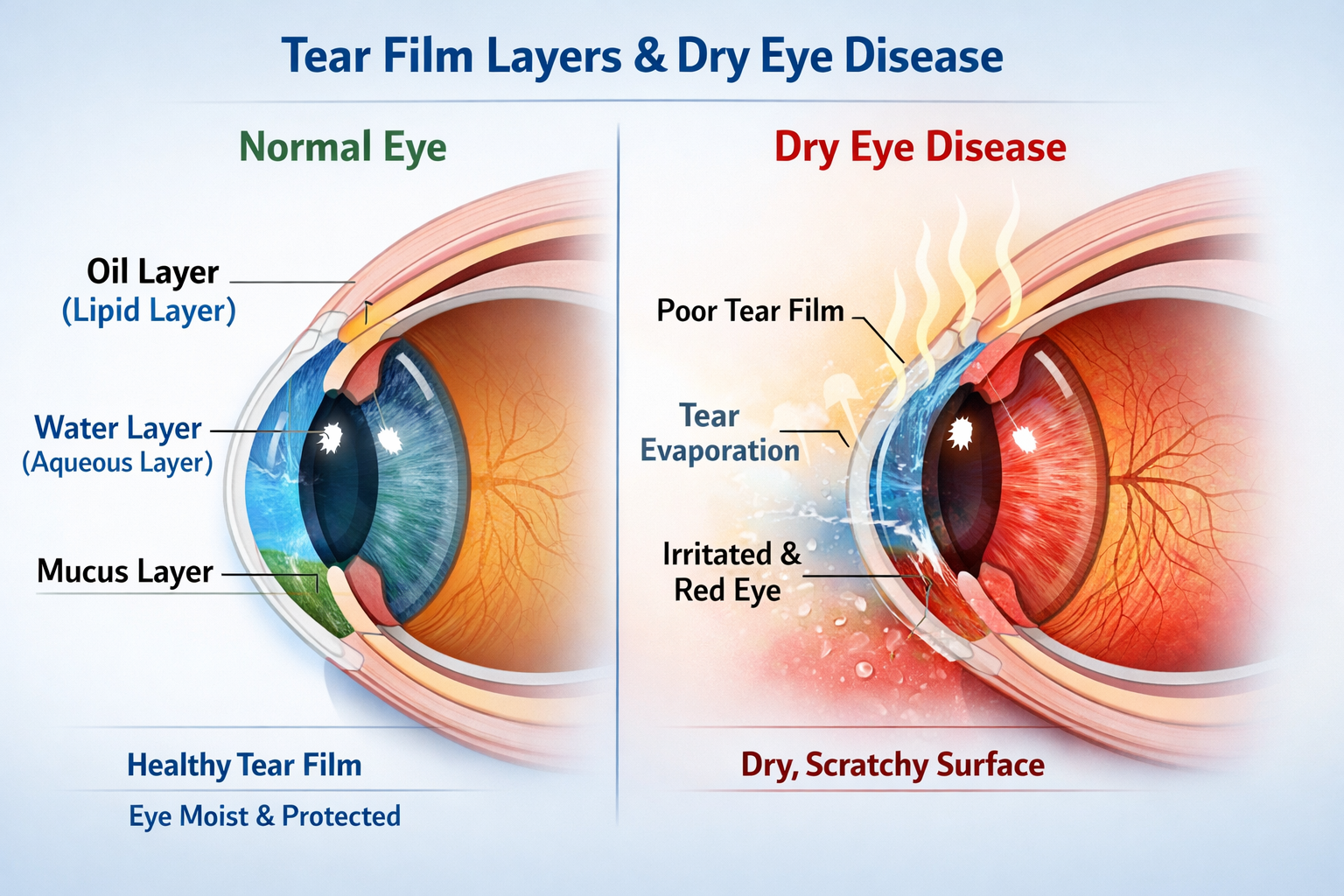
Dry eye disease (DED) is a condition characterized by insufficient tear production or rapid tear evaporation, leading to dryness and irritation. Tears play a crucial role in maintaining the health of the eye’s surface and ensuring clear vision.
A healthy tear film consists of three layers:
-
Oil Layer – Prevents tear evaporation
-
Water Layer – Keeps the eye hydrated
-
Mucus Layer – Helps tears spread evenly across the eye surface
When any of these layers become imbalanced, dry eye symptoms can occur.
How the Tear Film Works
Tears are not simply water. They contain a complex mixture of oils, proteins, mucus, and electrolytes that nourish and protect the eye.
The tear film performs several important functions:
-
Keeps the eyes moist and comfortable
-
Protects the eyes from dust and microorganisms
-
Provides oxygen and nutrients to the cornea
-
Helps maintain smooth optical clarity for sharp vision
When the tear film becomes unstable or insufficient, the eye surface becomes irritated and inflamed, leading to dry eye disease.
Types of Dry Eye Disease
Dry eye disease is generally divided into two main types:
Aqueous Deficient Dry Eye
This occurs when the lacrimal glands do not produce enough tears. The absence of the watery component of tears leads to dryness and irritation.
Common causes include:
-
Certain medications
Evaporative Dry Eye
This is the most common form of dry eye disease. It occurs when tears evaporate too quickly due to problems with the oil layer of the tear film.
A common cause of evaporative dry eye is dysfunction of the meibomian glands located in the eyelids.
Causes of Dry Eye Disease
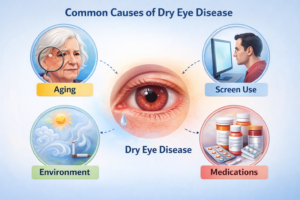
Dry eye disease can develop due to several factors. Understanding these causes can help prevent and manage the condition.
Aging
As people age, tear production naturally decreases. Dry eye is more common among individuals aged 50 and older.
Excessive Screen Use
Digital devices such as smartphones, computers, and tablets reduce blinking frequency—reduced blinking leads to faster tear evaporation and dryness.
Environmental Factors
Environmental conditions that contribute to dry eye include:
-
Wind
-
Smoke
-
Air conditioning
-
Dry climates
Contact Lens Use
Wearing contact lenses for extended periods may disrupt the tear film and lead to dryness.
Medications
Certain medications can reduce tear production, including:
-
Antihistamines
-
Antidepressants
-
Blood pressure medications
-
Decongestants
Hormonal Changes
Hormonal changes, especially in women during pregnancy or menopause, may affect tear production.
Eye Surgery
Procedures like laser vision correction may temporarily cause dry eyes during the healing process.
Symptoms of Dry Eye Disease
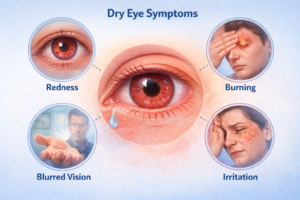
Symptoms of dry eye disease may range from mild irritation to severe discomfort.
Common symptoms include:
-
Burning sensation in the eyes
-
Stinging or irritation
-
Redness
-
Sensitivity to light
-
Feeling of sand or grit in the eyes
-
Eye fatigue
-
Watery eyes (reflex tearing)
Some individuals may experience symptoms only occasionally, whereas others may have chronic dry eye.
Risk Factors for Dry Eye Disease
Certain individuals are at increased risk of developing dry eye disease.
Key risk factors include:
-
Age above 50 years
-
Female gender
-
Long hours of computer work
-
Contact lens use
-
Vitamin A deficiency
-
Autoimmune disorders
-
Environmental pollution
Recognizing these risk factors can help in early diagnosis and prevention.
Diagnosis of Dry Eye Disease
Eye specialists diagnose dry eye disease through several clinical tests and examinations.
Common diagnostic methods include:
Tear Break-Up Time (TBUT)
This test measures the rate at which tears evaporate from the ocular surface.
Schirmer Test
The Schirmer test evaluates tear production by placing a small strip of filter paper under the eyelid.
Eye Surface Examination
Ophthalmologists examine the cornea and conjunctiva using fluorescein dye to detect dryness or damage.
Meibomian Gland Evaluation
The health and function of the eyelid oil glands are checked.
Early diagnosis helps prevent complications and ensures effective treatment.
Treatment Options for Dry Eye Disease
Treatment for dry eye disease depends on the severity and underlying cause.
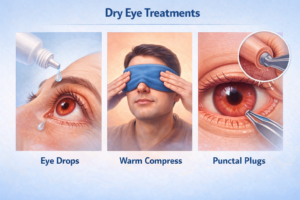
Artificial Tears
Lubricating eye drops are the most common treatment. They help supplement natural tears and provide moisture to the eyes.
Prescription Medications
Physicians may prescribe anti-inflammatory medications to reduce inflammation of the ocular surface.
Punctal Plugs
Tiny plugs may be inserted into the tear ducts to prevent tears from draining too quickly.
Eyelid Therapy
Warm compresses and eyelid cleaning can improve meibomian gland function.
Lifestyle Modifications
Adjusting daily habits can significantly improve dry eye symptoms.
Home Remedies for Dry Eye Disease
Several natural and lifestyle remedies may help relieve dry eye symptoms.
Warm Compress
Applying a warm compress to closed eyelids helps improve oil gland function.
Blinking Exercises
Conscious blinking while using digital devices can help maintain tear film stability.
Humidifier Use
Adding moisture to indoor air prevents evaporation.
Omega-3 Fatty Acids
Foods rich in omega-3 fatty acids may improve tear quality.
Sources include:
-
Fish
-
Flaxseeds
-
Walnuts
Stay Hydrated
Drinking sufficient water supports healthy tear production.
Ayurveda Treatments for Dry Eye Disease
In Ayurveda, dry eye disease is often associated with an imbalance of Vata dosha, which governs dryness and movement in the body. When Vata becomes aggravated, it may lead to symptoms such as dryness, irritation, burning sensation, and discomfort in the eyes. Ayurvedic treatment focuses on restoring balance through herbal remedies, eye therapies, diet, and lifestyle adjustments.
Below are some commonly recommended Ayurvedic approaches for managing dry eye symptoms.
Netra Tarpana (Eye Nourishment Therapy)
Netra Tarpana is one of the most effective Ayurvedic therapies for dry eyes. In this procedure, medicated ghee is gently retained around the eyes using a dough ring for a specific period.
Benefits:
-
Lubricates and nourishes the eye tissues
-
Relieves dryness and irritation
-
Improves tear film stability
This therapy is typically performed under the supervision of a trained Ayurvedic practitioner.
Triphala Eye Wash
Triphala is a well-known Ayurvedic formulation made from three fruits: Amalaki, Bibhitaki, and Haritaki.
A mild Triphala infusion is sometimes used as an eye wash.
Benefits:
-
Helps cleanse the eyes
-
Reduces inflammation and irritation
-
Supports overall eye health
Important: Always consult an Ayurvedic doctor before using herbal eye washes.
Use of Medicated Ghee
Triphala Ghrita and other medicated ghees are traditionally used in Ayurveda to improve ocular lubrication.
Benefits:
-
Nourishes ocular tissues
-
Helps reduce dryness
-
Supports healthy vision
It may be taken orally or used in specific Ayurvedic eye therapies under professional guidance.
Herbal Remedies for Eye Health
Several Ayurvedic herbs are believed to support eye function and reduce dryness.
Commonly used herbs include:
-
Amla
-
Turmeric
-
Licorice
These herbs may help reduce inflammation, improve circulation, and support tear production.
Nasya Therapy
Nasya is an Ayurvedic therapy where medicated oil or herbal extracts are gently administered into the nostrils.
Benefits:
-
Improves lubrication in the head and neck region
-
Helps relieve dryness in the eyes
-
Supports overall eye and sinus health
Nasya should always be performed under professional supervision.
Ayurvedic Diet for Dry Eyes
Diet plays an important role in balancing Vata dosha and improving eye lubrication.
Recommended foods:
-
Warm and nourishing foods
-
Ghee and healthy fats
-
Almonds and walnuts
-
Fresh fruits and vegetables
-
Plenty of water
Foods to avoid:
-
Excessively dry foods
-
Very spicy or processed foods
-
Excess caffeine
A balanced diet helps maintain proper hydration and supports tear production.
Lifestyle Recommendations in Ayurveda
Ayurveda also emphasizes daily habits to protect eye health.
Helpful practices include:
-
Adequate sleep
-
Regular eye relaxation exercises
-
Reducing prolonged screen exposure
-
Practicing gentle eye massage with medicated oils
-
Protecting eyes from dust and strong winds
These lifestyle adjustments can help reduce eye strain and dryness.
Important Note
Ayurvedic treatments may help relieve symptoms of dry eye disease, but they should not replace professional medical care. Individuals experiencing persistent dryness, irritation, or vision problems should consult a qualified ophthalmologist and an experienced Ayurvedic practitioner before initiating any treatment.
Prevention Tips for Dry Eye Disease
Preventing dry eye disease involves maintaining healthy eye habits.
Effective prevention strategies include:
-
Follow the 20-20-20 rule during screen use
-
Blink frequently when using digital devices
-
Wear sunglasses outdoors
-
Avoid direct air from fans or air conditioners
-
Maintain proper eyelid hygiene
-
Take breaks during long visual tasks
Adopting these habits can greatly reduce the risk of developing dry eyes.
Complications of Untreated Dry Eye Disease
If left untreated, dry eye disease may lead to several complications.
Possible complications include:
-
Eye infections
-
Corneal damage
-
Chronic eye inflammation
-
Vision disturbances
-
Reduced quality of life
Seeking early treatment is essential to avoid long-term eye damage.
Conclusion
Dry eye disease is a widespread eye condition that can significantly affect comfort, vision, and overall quality of life. Factors such as aging, digital screen exposure, environmental conditions, and certain medications can contribute to the development of dry eye symptoms.
The good news is that dry eye disease is manageable. With proper diagnosis, appropriate treatments, and healthy lifestyle habits, most people can control symptoms and maintain comfortable vision.
If you experience persistent eye dryness, irritation, or blurred vision, it is important to consult an ophthalmologist. Early treatment and preventive care can protect your eye health and help you maintain clear, comfortable vision for years to come.
Frequently Asked Questions (FAQs)
1. Is dry eye disease permanent?
Dry eye disease is usually a chronic condition, but it does not always cause constant symptoms. With appropriate treatment, such as artificial tears, lifestyle modifications, and medical care, most people can effectively manage the condition and maintain comfortable vision.
2. Can screen time cause dry eyes?
Yes, prolonged screen use can contribute to dry eye disease because people tend to blink less frequently while using digital devices. Reduced blinking leads to faster tear evaporation, which can cause eye dryness, irritation, and blurred vision.
3. Are dry eyes harmful to vision?
Mild dry eye symptoms usually cause discomfort rather than permanent damage. However, severe or untreated dry eye disease can lead to inflammation, corneal damage, and vision impairment, underscoring the importance of early diagnosis and treatment.
4. Can drinking water help dry eyes?
Staying well-hydrated supports the body’s natural tear production and helps maintain a healthy tear film. While drinking water alone may not cure dry eye disease, proper hydration can help reduce dryness and improve overall eye comfort.
5. Who is most at risk for dry eye disease?
People over the age of 50, women experiencing hormonal changes, contact lens wearers, and individuals who spend long hours on digital screens are at increased risk of developing dry eye disease. Environmental factors like pollution and air conditioning can also increase the risk.
6. Do artificial tears cure dry eye disease?
Artificial tears do not cure the underlying cause of dry eye disease, but they are highly effective at relieving symptoms and maintaining ocular surface lubrication. Regular use can significantly reduce irritation, burning, and dryness.
7. Can diet affect dry eye symptoms?
Yes, nutrition plays an important role in eye health. Foods rich in omega-3 fatty acids, such as fish, flaxseeds, and walnuts, may help improve tear quality and reduce inflammation associated with dry eye disease.
8. Is dry eye disease common?
Dry eye disease is among the most common ocular conditions worldwide, particularly in the digital age. Increased screen time, aging populations, and environmental factors have contributed to the rising prevalence of dry eye symptoms.
Reference: https://en.wikipedia.org/wiki/Dry_eye_syndrome