

Watery eyes (नम आँखें), medically known as Epiphora, are a common yet often frustrating eye condition affecting people of all ages. While occasional tearing is normal (for example, when exposed to wind or strong emotions), persistent or excessive tearing may signal an underlying issue. If you have watery eyes, there are several possible reasons. They range from allergies to infections, blocked tear ducts, and funny-looking eyelids. So grab a box of tissues, dab your eyes, and find out why your tears runneth over.
From environmental irritants to infections and structural problems in the tear drainage system, watery eyes can arise from a variety of causes. This comprehensive guide will help you understand why your eyes water, how to treat the condition, and when to seek medical attention.
What Are Watery Eyes?
Watery eyes occur when there is an imbalance in the production and drainage of tears. Normally, tears are produced by lacrimal glands and drained through small ducts into the nasal cavity. However, when this system is disrupted, tears may overflow onto the face.
Interestingly, watery eyes can also result from dryness. In conditions like Dry Eye Syndrome, the eyes produce excess reflex tears to compensate for irritation.

How the Tear System Works
The tear system consists of three main components:
- Tear production: Lacrimal glands produce tears to lubricate and protect the eye.
- Tear distribution: Blinking spreads tears evenly across the eye surface.
- Tear drainage: Tears drain through the puncta into the tear ducts and then into the nose.
When any part of this system fails, watery eyes may occur.
Common Causes of Watery Eyes
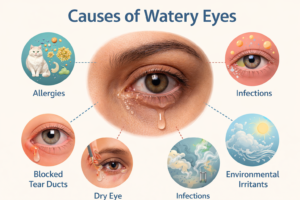
Dry Eyes (Paradoxical Tearing)
It may sound counterintuitive, but dry eyes are one of the most common causes of watery eyes. When the eyes become dry, they trigger reflex tearing.
Allergies
Allergic reactions to pollen, dust, or pet dander can irritate the eyes, leading to redness, itching, and excessive tearing. This is commonly associated with Allergic Conjunctivitis.
Eye Infections
Infections such as Conjunctivitis can cause watery discharge, redness, and discomfort. Viral and bacterial infections often lead to increased tear production.
Blocked Tear Ducts
Blocked or narrowed tear ducts prevent proper drainage of tears, causing them to overflow. This is especially common in infants and older adults.
Environmental Irritants
Exposure to wind, smoke, pollution, or bright light can trigger tear production as a protective response.
Eyelid Problems
Conditions such as entropion (inward-turning eyelid) or ectropion (outward-turning eyelid) can disrupt tear drainage and lead to watery eyes.
Foreign Objects
Dust, debris, or eyelashes trapped in the eye can stimulate tear production.
Digital Eye Strain
Excessive screen time reduces blinking frequency, leading to dryness and reflex tearing. This is increasingly common in today’s digital lifestyle.
Symptoms Associated with Watery Eyes
Watery eyes may occur alone or with other symptoms, including:
- Redness
- Itching
- Burning sensation
- Blurred vision
- Eye discharge
- Sensitivity to light
If these symptoms persist, they may indicate an underlying condition requiring treatment.
Diagnosis of Watery Eyes
An eye specialist (ophthalmologist) may perform:
- Eye examination: To check for irritation or infection
- Tear drainage tests: To evaluate blocked ducts
- Slit-lamp examination: To assess eye structures in detail
In some cases, imaging tests may be required.
Treatment Options for Watery Eyes
Artificial Tears
Lubricating eye drops help relieve dryness and reduce reflex tearing.
Antihistamines
For allergy-related watery eyes, antihistamine drops or medications can reduce symptoms.
Antibiotics
If a bacterial infection like conjunctivitis is present, antibiotic eye drops may be prescribed.
Tear Duct Procedures
Blocked tear ducts may require:
- Dilation and irrigation
- Surgical procedures such as dacryocystorhinostomy (DCR)
Eyelid Surgery
Corrective surgery may be needed for eyelid abnormalities.
Lifestyle Modifications
- Reduce screen time
- Use protective eyewear
- Maintain proper eye hygiene

Home Remedies for Watery Eyes
Here are some effective home remedies:
Warm Compress
Applying a warm compress can help open blocked tear ducts and relieve irritation.
Cold Compress
Useful for reducing inflammation caused by allergies.
Proper Eye Hygiene
Keep your eyes clean and avoid touching them with dirty hands.
Stay Hydrated
Adequate hydration supports healthy tear production.
Blink More Often
Especially during screen use, blinking helps maintain tear balance.
Preventing Watery Eyes
Prevention strategies include:
- Avoid allergens and irritants
- Wear sunglasses outdoors
- Take breaks from screens (20-20-20 rule)
- Maintain good eye hygiene
- Use humidifiers in dry environments
When to See a Doctor
Seek medical attention if you experience:
- Persistent tearing
- Pain or swelling
- Vision changes
- Thick discharge
- Sensitivity to light
These could indicate serious conditions that require prompt treatment.
Complications of Untreated Watery Eyes
If left untreated, watery eyes may lead to:
- Chronic infections
- Skin irritation around the eyes
- Vision disturbances
- Reduced quality of life
Watery Eyes in Children vs Adults
In Children:
- Often caused by blocked tear ducts
- Usually resolves naturally
In Adults:
- More likely due to dryness, infections, or aging-related changes
Ayurveda Treatments for Watery Eyes
In Ayurveda, watery eyes (often linked with imbalance in Pitta and Kapha doshas) are managed through natural therapies aimed at soothing the eyes, reducing inflammation, and improving tear balance.
Key Ayurvedic Approaches
- Netra Tarpana (Eye Nourishment Therapy):
A specialized treatment where medicated ghee is retained around the eyes to deeply lubricate and strengthen eye tissues. - Triphala Eye Wash:
A herbal decoction made from Triphala is used to gently cleanse the eyes and reduce irritation. - Anjana (Herbal Collyrium):
Application of medicated herbal paste to the inner eyelids helps clear toxins and improve eye function. - Ghee Consumption:
Intake of pure cow’s ghee is believed to nourish eye tissues and balance Pitta. - Herbal Remedies:
Herbs like Amla and Neem are used for their cooling and anti-inflammatory properties.
Lifestyle Tips
- Avoid excessive screen time and heat exposure
- Follow a balanced diet that pacifies Pitta (cooling foods)
- Ensure proper sleep and eye rest
Note: Ayurvedic treatments should be followed under the guidance of a qualified practitioner, especially for persistent or severe symptoms.
Home Remedies for Watery Eyes
Watery eyes, also known as Epiphora, can often be managed at home—especially when caused by mild irritation, dryness, or environmental factors. Here are effective, safe, and easy-to-follow remedies:
Warm Compress
A warm compress helps open blocked tear ducts and improves oil secretion from eyelid glands.
How to do it:
- Soak a clean cloth in warm (not hot) water
- Gently place it over closed eyes for 5–10 minutes
- Repeat 2–3 times daily
Why it helps:
It reduces blockage and soothes irritation, especially useful in mild infections or duct issues.
Cold Compress
Cold compresses are excellent for reducing inflammation caused by allergies or irritation.
How to do it:
- Wrap ice cubes in a clean cloth or use chilled water
- Apply gently over closed eyes for a few minutes
Why it helps:
It calms swelling, redness, and excessive tearing due to allergic reactions like Allergic Conjunctivitis.
Maintain Proper Eye Hygiene
Keeping your eyes clean is essential to prevent irritation and infection.
Tips:
- Wash your hands before touching your eyes
- Clean eyelids gently with diluted baby shampoo or sterile wipes
- Remove makeup before sleeping
Why it helps:
Reduces the risk of infections such as Conjunctivitis.
Blink More Often
Many people blink less while using screens, which can worsen dryness.
How to do it:
- Follow the 20-20-20 rule (every 20 minutes, look at something 20 feet away for 20 seconds)
- Make a conscious effort to blink fully
Why it helps:
Prevents dryness-related tearing often linked to Dry Eye Syndrome.
Stay Hydrated
Dehydration can affect tear quality and eye lubrication.
What to do:
- Drink adequate water throughout the day
- Include hydrating foods like fruits and vegetables
Why it helps:
Supports healthy tear production and reduces irritation.
Use a Humidifier
Dry indoor air (especially from AC or heaters) can worsen eye dryness.
What to do:
- Use a humidifier at home or the workplace
- Keep indoor air moisture balanced
Why it helps:
Prevents tear evaporation and reduces reflex tearing.
Avoid Irritants
Environmental triggers are a common cause of watery eyes.
Avoid:
- Smoke and pollution
- Strong perfumes or chemicals
- Dust and allergens
Why it helps:
Reduces eye irritation and excessive tear production.
Wear Protective Eyewear
Protect your eyes from wind, sunlight, and dust.
What to do:
- Wear sunglasses outdoors
- Use protective glasses in dusty environments
Why it helps:
Prevents external triggers that stimulate tearing.
Gentle Eye Massage
A light massage can help improve tear drainage.
How to do it:
- Gently massage the area near the inner corner of the eye
- Use clean hands and soft pressure
Why it helps:
May help relieve mild tear duct blockage.
Limit Screen Time
Excessive screen exposure contributes to dryness and reflex tearing.
What to do:
- Take regular breaks
- Adjust screen brightness and contrast
Why it helps:
Maintains proper tear balance and reduces strain.
Important Note
While these remedies are helpful for mild cases, persistent or severe watery eyes may require medical attention. If symptoms continue, worsen, or are accompanied by pain, swelling, or vision changes, consult an eye specialist promptly.

Conclusion
Watery eyes, or Epiphora, can range from a temporary annoyance to a sign of an underlying eye condition. While factors like environmental irritants or screen strain may cause occasional tearing, persistent symptoms often point to issues such as Dry Eye Syndrome, allergies, infections, or blocked tear ducts. Recognizing the root cause is essential, as effective treatment depends on accurate diagnosis and timely care.
With the right combination of preventive measures, home remedies, and medical treatments, most cases of watery eyes can be managed effectively. Simple habits like maintaining eye hygiene, limiting screen exposure, and protecting your eyes from irritants can make a significant difference. However, if symptoms continue or worsen, seeking professional evaluation ensures proper treatment and helps maintain long-term eye health and comfort.
Frequently Asked Questions
1. What causes watery eyes?
Watery eyes, or Epiphora, can be caused by dryness, allergies, infections, or blocked tear ducts. Environmental factors like wind, smoke, and screen strain can also trigger excessive tearing.
2. Can dry eyes lead to excessive tearing?
Yes, Dry Eye Syndrome often causes reflex tearing. When the eyes become dry, they produce excess tears to compensate for irritation.
3. Are watery eyes a sign of infection?
Sometimes. Conditions like Conjunctivitis can cause watery discharge along with redness and irritation, but not all tearing indicates infection.
4. How can I stop watery eyes naturally?
Simple remedies like warm compresses, proper hydration, and avoiding irritants can help. Maintaining eye hygiene and reducing screen time also improves symptoms.
5. When should I see a doctor for watery eyes?
You should seek medical help if tearing is persistent, painful, or accompanied by vision changes, swelling, or thick discharge.
6. Can allergies cause watery eyes?
Yes, allergies commonly trigger watery eyes due to inflammation, especially in Allergic Conjunctivitis. Symptoms often include itching and redness.
7. Do watery eyes affect vision?
Excess tears can temporarily blur vision by disrupting the tear film. Persistent tearing may interfere with daily activities if left untreated.
8. Is screen time responsible for watery eyes?
Prolonged screen use reduces blinking, leading to dryness and reflex tearing. This is a common cause in people with heavy digital device usage.
9. Can blocked tear ducts cause watery eyes?
Yes, blocked tear ducts prevent proper drainage, causing tears to overflow. This condition is more common in infants and older adults.
Reference: https://www.webmd.com/eye-health/watery-eyes-causes