
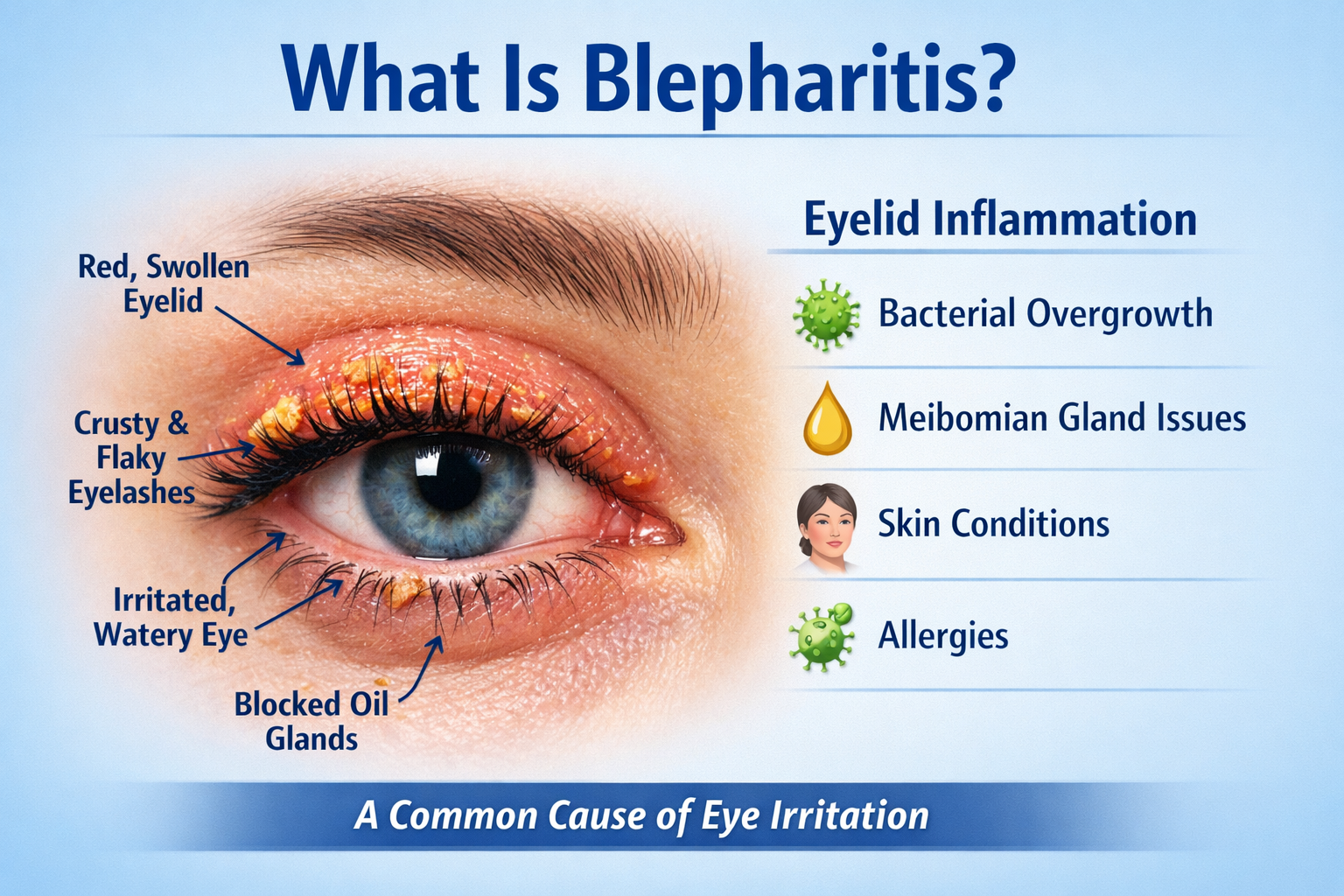
Blepharitis (ब्लेफेराइटिस), sometimes known as granulated eyelids, is one of the most common ocular conditions characterized by inflammation, scaling, reddening, and crusting of the eyelid. This condition may also cause swelling, burning, itching, or a grainy sensation when foreign objects or substances are introduced into the eye. Although blepharitis by itself is not sight-threatening, it can lead to permanent alterations of the eyelid margin. The primary cause is bacteria and inflammation from congested meibomian oil glands at the base of each eyelash. Other conditions may cause blepharitis, whether infectious or noninfectious, including, but not limited to, bacterial infections or allergies.
What Is Blepharitis?
Blepharitis is inflammation of the eyelid margins, typically where the eyelashes grow. It may affect one or both eyes and can be chronic or recurrent.
The condition is commonly linked to:
-
Bacterial overgrowth
-
Dysfunction of the oil glands (meibomian glands)
-
Skin conditions such as dandruff or rosacea
-
Allergic reactions
While blepharitis can be uncomfortable, it is rarely dangerous. However, untreated blepharitis can lead to complications such as dry eye syndrome, styes, or eyelash loss.
Types of Blepharitis
Blepharitis is generally classified into two main types:
Anterior Blepharitis
This type affects the outer front part of the eyelid, near the eyelashes.
Common causes:
-
Bacterial infection (especially Staphylococcus)
-
Seborrheic dermatitis (dandruff)
Symptoms may include:
-
Crusty eyelashes
-
Red eyelids
-
Burning sensation
Posterior Blepharitis
Also known as Meibomian Gland Dysfunction (MGD), this form affects the inner eyelid where the oil glands are located.
Common causes:
-
Blocked or inflamed meibomian glands
-
Rosacea
-
Hormonal changes
Posterior blepharitis often leads to:
-
Dry eye symptoms
-
Eye irritation
What Causes Blepharitis?
Understanding the underlying cause is crucial for effective blepharitis treatment.
Common Causes Include
-
Bacterial growth on the eyelids
-
Meibomian gland dysfunction
-
Seborrheic dermatitis
-
Rosacea
-
Allergic reactions
-
Poor eyelid hygiene
-
Demodex mites
In many cases, blepharitis is not caused by a single factor but by a combination of conditions.
Blepharitis Symptoms
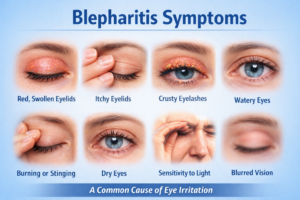
Blepharitis symptoms can vary from mild to severe and often worsen in the morning.
Common Symptoms
-
Red, swollen eyelids
-
Itchy eyelids
-
Burning or stinging sensation
-
Crusty eyelashes upon waking
-
Watery eyes
-
Dry eyes
-
Sensitivity to light
-
Flaky skin around the eyes
-
Blurred vision (temporary)
Symptoms may come and go, making blepharitis a frustrating chronic condition for many individuals.
Who Is at Risk?
Certain individuals are more prone to developing blepharitis:
-
People with oily skin
-
Individuals with dandruff
-
Those suffering from rosacea
-
Contact lens wearers
-
People who frequently use eye makeup
-
Older adults
Real-World Example 1: Chronic Office Eye Irritation
Case Study: Ramesh, 38, IT Professional
Ramesh worked long hours at a computer in Mumbai. He frequently complained of itchy, burning eyes and blamed screen time for it. However, his symptoms worsened with crusting along the eyelashes every morning.
After visiting an eye specialist, he was diagnosed with posterior blepharitis caused by meibomian gland dysfunction. With regular warm compresses and improved eyelid hygiene, his symptoms improved significantly within weeks.
Lesson: Not all eye irritation from screen use is digital strain. Persistent symptoms may indicate blepharitis.
Real-World Example 2: Makeup-Related Blepharitis
Case Study: Priya, 27, Marketing Executive
Priya regularly wore waterproof eyeliner and mascara. Over time, she developed red, itchy eyelids and flaky skin around her lashes. She assumed it was an allergy, but was diagnosed with anterior blepharitis.
The cause? Makeup residue is blocking her eyelid glands.
After switching to gentle products and adopting proper eyelid cleansing routines, her symptoms resolved.
Lesson: Cosmetic hygiene plays a vital role in preventing blepharitis.
How Is Blepharitis Diagnosed?
Blepharitis diagnosis typically involves:
-
Medical history review
-
Examination of eyelids using a slit lamp
-
Evaluation of tear film quality
-
Checking for dandruff, mites, or gland blockage
In rare cases, a sample of debris may be tested for bacteria.
Blepharitis Treatment Options
Blepharitis treatment depends on the underlying cause. Since it is often chronic, management focuses on symptom control rather than complete cure.
Eyelid Hygiene (First-Line Treatment)
Daily eyelid cleaning is the cornerstone of treatment.
Steps include:
-
Apply a warm compress for 5–10 minutes
-
Gently massage eyelids
-
Clean eyelid margins with diluted baby shampoo or prescribed cleanser
-
Rinse and pat dry
Consistency is key.
Medications
Depending on severity, doctors may prescribe:
-
Antibiotic eye drops or ointments
-
Oral antibiotics (for rosacea-related cases)
-
Steroid eye drops (short-term use)
-
Artificial tears for dry eyes
Advanced Treatments
In moderate to severe cases:
-
Meibomian gland expression
-
Thermal pulsation therapy
-
Intense Pulsed Light (IPL) therapy
These treatments are typically offered by eye care professionals.
Home Remedies for Blepharitis
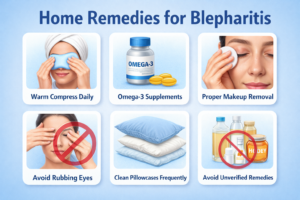
While medical advice is essential, certain home remedies can support recovery:
-
Warm compresses daily
-
Omega-3 fatty acid supplements
-
Proper makeup removal
-
Avoid rubbing your eyes
-
Clean pillowcases frequently
However, avoid self-medicating with unverified remedies.
Complications of Untreated Blepharitis
If left unmanaged, blepharitis can lead to:
-
Chronic dry eye syndrome
-
Styes (hordeolum)
-
Chalazion
-
Eyelash loss
-
Corneal irritation
-
Blurred vision
Early management prevents long-term discomfort.
Blepharitis vs. Other Eye Conditions
Blepharitis is often confused with:
-
Conjunctivitis (pink eye)
-
Allergic eye disease
-
Dry eye syndrome
-
Styes
Key difference: Blepharitis primarily affects the eyelid margins, not the white of the eye.
Prevention Tips for Blepharitis
Although not always preventable, you can reduce flare-ups with these strategies:
Daily Habits
-
Maintain eyelid hygiene
-
Remove makeup thoroughly
-
Replace old cosmetics
-
Avoid sharing eye products
-
Manage dandruff
-
Stay hydrated
For Screen Users
-
Follow the 20-20-20 rule
-
Blink consciously
-
Use artificial tears if needed
Living With Chronic Blepharitis
Blepharitis can be recurring, but it is manageable.
Think of eyelid hygiene like brushing your teeth — it must be done regularly to prevent flare-ups.
Patients who commit to consistent care often experience:
-
Fewer symptoms
-
Improved comfort
-
Better tear quality
-
Reduced redness
When to See a Doctor
Consult an eye specialist if:
-
Symptoms persist despite home care
-
Vision becomes blurred
-
You experience severe pain
-
There is significant swelling
-
Styes keep recurring
Early diagnosis leads to better control.
Can Eye Exercises Control Blepharitis?
Here are safe, commonly recommended eye exercises for symptom relief, especially helpful for digital eye strain, mild focusing fatigue, dry eyes, and tension-related discomfort.
20-20-20 Rule
How to do it?
-
Every 20 minutes, stop looking at your screen.
-
Look at something at least 20 feet away.
-
Focus on it for 20 seconds.
-
Blink normally while doing this.
How does it help?
When you look at screens, your focusing muscle (inside the eye) stays tightened for long periods. This exercise relaxes that muscle and reduces eye fatigue. It also reminds you to blink, which helps prevent dryness.
Conscious Blinking Exercise
How to do it?
-
Sit comfortably and look straight ahead.
-
Close your eyes gently for 2 seconds.
-
Open them slowly.
-
Repeat 10–15 times.
-
Do this every hour if you use screens a lot.
How does it help?
People blink less when using phones or computers. Less blinking leads to dry, irritated eyes. This exercise spreads fresh tears over the eye surface, improving moisture and comfort.
Palming
How to do it?
-
Rub your hands together to warm them.
-
Close your eyes.
-
Place your cupped palms gently over your closed eyes (do not press).
-
Sit like this for 1–2 minutes while breathing slowly.
-
Remove your hands slowly and open your eyes.
How does it help?
Darkness and warmth relax the eye muscles and calm the nervous system. It reduces strain caused by prolonged focusing and bright screens.
Near-Far Focus Exercise
How to do it?
-
Hold your thumb about 10 inches from your face.
-
Focus on your thumb for 10 seconds.
-
Now look at something far away (at least 20 feet away).
-
Focus on that for 10 seconds.
-
Repeat 10 times.
How does it help?
This exercise strengthens and relaxes the focusing system of the eye. It improves the flexibility of the focusing muscle and reduces symptoms like temporary blur from screen use.
Figure Eight Exercise
How to do it?
-
Imagine a large number “8” lying sideways (infinity sign) about 10 feet in front of you.
-
Slowly trace the shape with your eyes.
-
Move in one direction for 30 seconds.
-
Then reverse direction for another 30 seconds.
How does it help?
This improves coordination of the eye muscles and reduces stiffness caused by staring at one spot for too long.
Eye Rolling
How to do it?
-
Sit upright and relax.
-
Slowly roll your eyes upward.
-
Move them in a circular motion clockwise.
-
Repeat 5 times.
-
Then switch direction (counterclockwise) 5 times.
How does it help?
This gently stretches the eye muscles and improves circulation around the eyes, which may reduce tension and mild discomfort.
Warm Compress for Eye Relaxation
How to do it?
-
Soak a clean cloth in warm (not hot) water.
-
Wring out excess water.
-
Place it over closed eyes for 5–10 minutes.
-
Repeat once or twice daily.
How does it help?
Warmth improves oil flow from eyelid glands, which helps reduce dryness and irritation. It is especially helpful for people with mild dry eye or eyelid inflammation.
Important Note
These exercises help with:
-
Digital eye strain
-
Temporary blurred vision from focusing fatigue
-
Mild dry eye symptoms
-
Eye tension or tiredness
They do not cure refractive errors (like myopia, hyperopia, astigmatism) or serious eye diseases.
If you experience:
-
Persistent pain
-
Sudden vision changes
-
Flashes of light
-
Severe redness
You should see an eye specialist promptly.
Conclusion
Blepharitis is a common but often overlooked eyelid condition that can significantly impact daily comfort and eye health. Although it is rarely serious, its chronic and recurring nature means it should not be ignored. From bacterial overgrowth and meibomian gland dysfunction to lifestyle and cosmetic habits, multiple factors can contribute to blepharitis. Recognizing the early symptoms — such as redness, crusting, itching, and dry eyes — allows for timely management and prevention of complications.
The good news is that blepharitis is highly manageable with consistent eyelid hygiene, appropriate medical treatment when necessary, and simple preventive measures. Real-world cases show that small changes — like proper makeup removal, warm compresses, and regular eye care routines — can make a significant difference. By staying proactive and maintaining long-term eyelid care, individuals can control flare-ups, reduce discomfort, and protect their overall eye health.
Frequently Asked Questions (FAQs)
Reference: https://en.wikipedia.org/wiki/Blepharitis