
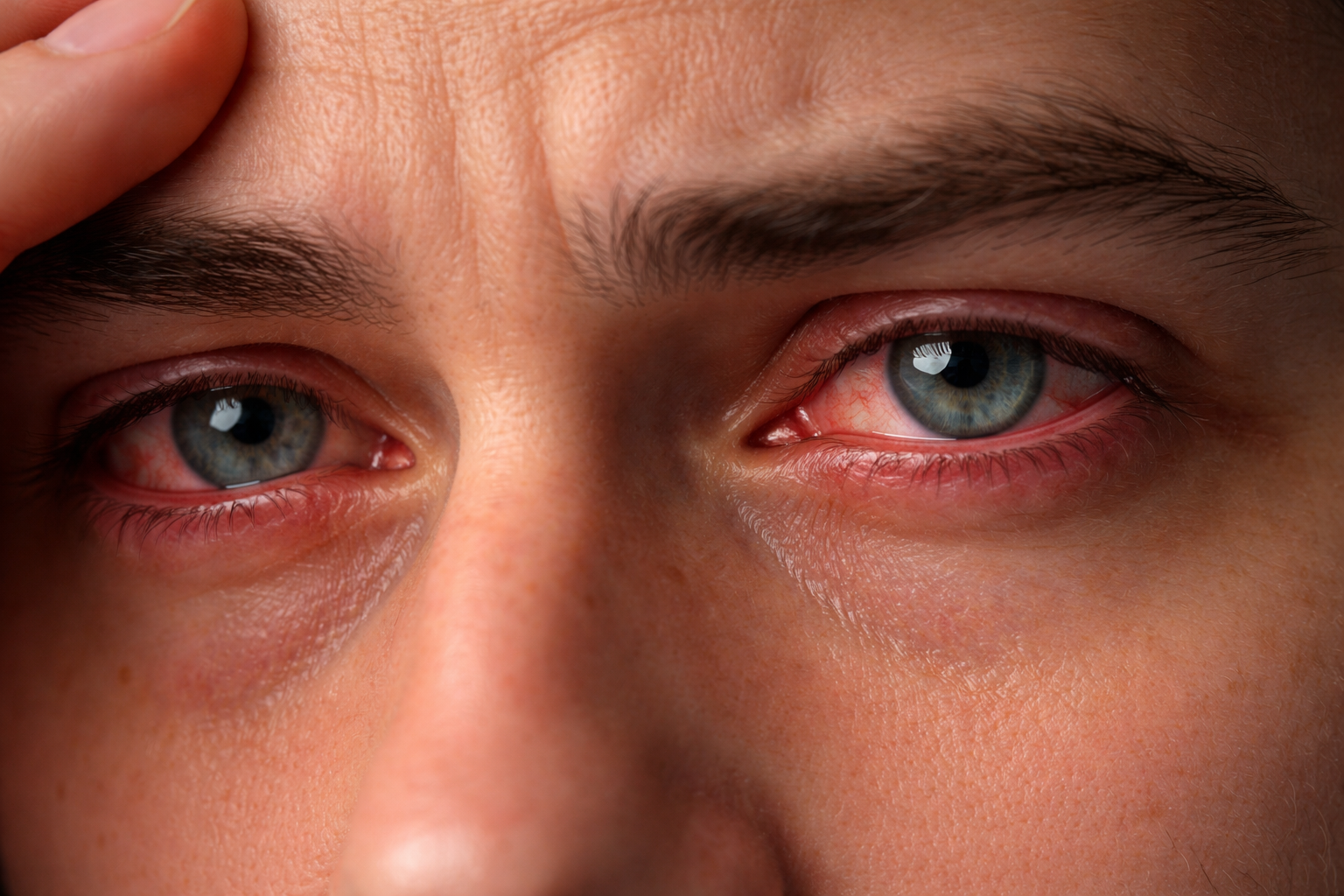
Eye fatigue (आँखों की थकान) or eyestrain is a condition that occurs when the muscle of the eyeball (internal and external muscles of the eye) gets tired from intense use. In today’s digital world, our eyes rarely get a break. Whether you’re working on a computer, scrolling on your phone, or binge-watching your favorite shows, prolonged screen exposure can take a toll on your eyes. This condition is commonly known as eye fatigue, also referred to as digital eye strain or computer vision syndrome. The most frequent symptoms of eye fatigue are tearing with burning eyes, dry eyes, and a sensation of something in the eyes. Also, sensitivity to light, headaches, blurred vision, and double vision can occur.
Eye fatigue is not usually serious, but it can significantly impact your comfort, productivity, and quality of life. The good news? It’s largely preventable and manageable with simple lifestyle changes and proper eye care.
What is Eye Fatigue?
Eye fatigue occurs when your eyes become tired due to intense or prolonged use. Just like muscles in your body get tired after exercise, your eye muscles can also become strained after focusing for extended periods.
Common triggers include:
- Long hours of screen time
- Reading without breaks
- Driving long distances
- Exposure to bright or harsh lighting
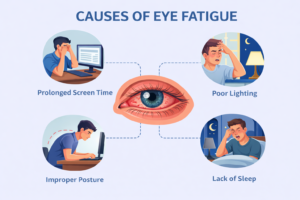
Causes of Eye Fatigue
Understanding the root causes can help you prevent and manage eye fatigue effectively.
Prolonged Screen Time
Spending long hours on digital devices reduces your natural blinking rate, leading to dryness and irritation. Continuous focus on screens also overworks the eye muscles, causing strain and discomfort.
Poor Lighting Conditions
Working in very dim or overly bright lighting forces your eyes to adjust constantly. This extra effort can lead to quicker fatigue, especially when combined with screen use or reading.
Improper Screen Settings
If your screen is too bright, too dim, or has low contrast, your eyes must work harder to interpret what you see. Glare from screens or reflections can further increase visual stress and discomfort.
Uncorrected Vision Problems
Conditions like nearsightedness, farsightedness, or Astigmatism can make focusing difficult. When left uncorrected, your eyes strain continuously to see clearly, leading to fatigue.risk factors,
Poor Posture
Sitting too close to a screen or at an awkward angle can strain both your eyes and neck. Improper posture affects viewing distance and alignment, making your eyes work harder than necessary.
Lack of Sleep
Insufficient sleep prevents your eyes from fully recovering from daily strain. Tired eyes are more prone to dryness, irritation, and difficulty focusing, increasing the chances of fatigue.
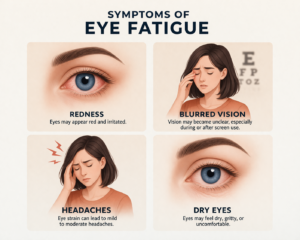
Symptoms of Eye Fatigue
Eye fatigue symptoms can vary from mild discomfort to persistent irritation.
Common Symptoms
- Tired or sore eyes
- Dry or watery eyes
- Blurred or double vision
- Headaches
- Increased sensitivity to light
- Difficulty focusing
- Neck and shoulder pain
If symptoms persist, they may indicate underlying conditions like Dry Eye Syndrome or Astigmatism.
Eye Fatigue Risk Factors
Certain individuals are more prone to eye fatigue:
- Office workers and IT professionals
- Students with long study hours
- Frequent smartphone users
- Gamers
- Elderly individuals
- People with existing eye conditions
Diagnosis of Eye Fatigue
Eye fatigue is typically diagnosed through a comprehensive eye examination by an eye care professional. Tests may include:
- Visual acuity test
- Refraction test
- Eye muscle coordination test
- Tear film evaluation
Regular eye check-ups are crucial for early detection and prevention.
Effective Treatments for Eye Fatigue
Follow the 20-20-20 Rule
Take a break every 20 minutes by looking at something 20 feet away for 20 seconds. This relaxes the eye muscles and reduces continuous focusing strain caused by screens.
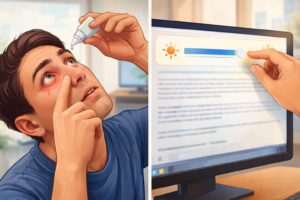
Use Artificial Tears
Lubricating eye drops help keep your eyes moist and relieve dryness caused by reduced blinking. They are especially helpful for people experiencing symptoms of Dry Eye Syndrome.
Adjust Screen Settings
Optimizing brightness, contrast, and text size makes it easier for your eyes to focus. Reducing glare and using blue light filters can significantly decrease visual discomfort.
Correct Vision Problems
Wearing the right prescription glasses or lenses helps your eyes focus properly. Uncorrected refractive errors can worsen fatigue and lead to persistent strain.
Improve Lighting Conditions
Ensure your workspace has balanced lighting to avoid glare and harsh contrasts. Proper lighting reduces the extra effort your eyes need to see clearly, minimizing fatigue.
Eye Exercises for Relief
Lifestyle Changes to Prevent Eye Fatigue
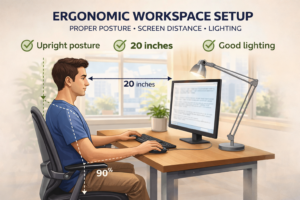
Maintain Proper Screen Distance
Keep your screen about 20–24 inches away from your eyes and slightly below eye level. This position reduces strain on your eye muscles and helps maintain a natural, comfortable viewing angle during long work sessions.
Optimize Workspace Ergonomics
Set up your workstation so that your chair, desk, and screen are properly aligned. A well-designed ergonomic setup minimizes strain not just on your eyes, but also on your neck, shoulders, and back.
Stay Hydrated
Drinking enough water throughout the day supports healthy tear production, which keeps your eyes naturally lubricated. Proper hydration can help reduce symptoms linked to Dry Eye Syndrome.
Get Adequate Sleep
Aim for 7–8 hours of quality sleep each night to allow your eyes to rest and recover. Well-rested eyes are less prone to irritation, dryness, and difficulty focusing during the day.
Take Frequent Breaks
Avoid staring at screens continuously for long periods by taking short breaks every 20–30 minutes. These breaks relax your eye muscles, improve focus, and significantly lower the risk of digital eye strain.
Avoid prolonged screen use.
Eye Fatigue in Children
With increased online learning and screen exposure, children are also experiencing eye fatigue more frequently.
Signs in Children
- Frequent eye rubbing
- Squinting
- Complaints of headaches
- Reduced attention span
Parents should limit screen time and encourage outdoor activities.
When to See a Doctor
Consult an eye specialist if:
- Symptoms persist despite rest
- Vision problems worsen
- You experience severe headaches
- Eye pain becomes frequent
Ayurvedic Perspective on Eye Fatigue
Traditional Ayurveda offers natural ways to manage eye fatigue:
Common Remedies
- Triphala Eye Wash
- Ghee Application (under supervision)
- Netra Tarpana (therapeutic eye treatment)
These methods aim to balance eye health naturally, but should be used under expert guidance.
Home Remedies for Eye Fatigue
Cold Compress
Place a clean cloth soaked in cold water over your closed eyes for 5–10 minutes. This helps reduce inflammation, soothes tired eyes, and provides instant relief from strain.
Warm Compress
Use a warm (not hot), damp cloth and gently place it over your eyes. It relaxes eye muscles, improves blood circulation, and can ease discomfort associated with dryness.
Cucumber Slices
Place chilled cucumber slices over your closed eyes for about 10–15 minutes. Their cooling effect helps reduce puffiness, refreshes the eyes, and relieves fatigue.
Rose Water
Dip cotton pads in pure rose water and place them on your eyelids for 10 minutes. Rose water has soothing properties that help calm irritation and refresh tired eyes.
Blinking Practice
Make a conscious effort to blink more often, especially while using screens. Regular blinking spreads natural tears evenly, preventing dryness and reducing strain.
Palming Technique
Rub your hands together to generate warmth and gently cup them over your closed eyes without pressure. This relaxes the eye muscles and provides a calming effect.
Adequate Hydration
Drink plenty of water throughout the day to maintain moisture levels in your eyes. Proper hydration helps prevent dryness linked to Dry Eye Syndrome.
Herbal Tea Bags
Place cooled tea bags (like green or chamomile tea) over your eyes for 10 minutes. The antioxidants and mild astringent properties help reduce irritation and refresh your eyes.
Myths About Eye Fatigue
Myth 1: Eye Fatigue Damages Vision Permanently
Fact: It’s usually temporary and reversible.
Myth 2: Only Screen Users Get Eye Fatigue
Fact: Reading and driving can also cause it.
Myth 3: Glasses Make Eyes Worse
Fact: Corrective lenses actually reduce strain.
Conclusion
Eye fatigue has quietly become one of the most common discomforts of modern life, especially with the growing dependence on digital devices. While it may seem like a minor issue, persistent strain can affect your productivity, focus, and overall well-being. The encouraging part is that eye fatigue is usually temporary and manageable with simple, consistent habits like taking regular breaks, adjusting screen settings, and maintaining proper posture.
Being mindful of early symptoms—such as dryness, blurred vision, or headaches—can help you take timely action before the discomfort worsens. Incorporating small changes like the 20-20-20 rule, staying hydrated, and practicing eye exercises can make a noticeable difference in how your eyes feel throughout the day. Addressing underlying issues like Dry Eye Syndrome or refractive errors is equally important for long-term relief.
Ultimately, your eyes are constantly working for you, often without rest. Giving them the care they deserve is not just about comfort, but also about preserving your vision in the long run. By adopting a proactive approach to eye health, you can reduce fatigue, enhance visual clarity, and maintain healthier eyes in an increasingly screen-driven world.
FAQs
1. Is eye fatigue serious?
Eye fatigue is generally not a serious condition and usually goes away with rest. However, if it occurs frequently or becomes persistent, it may indicate underlying issues that need attention.
2. How long does eye fatigue last?
Most cases of eye fatigue improve within a few hours after resting your eyes. If the strain is due to continuous screen use, symptoms may last longer but typically resolve with proper care and breaks.
3. Can eye fatigue cause headaches?
Yes, prolonged eye strain can lead to tension headaches due to overworked eye muscles. These headaches often occur after long periods of reading or screen exposure.
4. Are blue light glasses effective?
Blue light glasses may help reduce glare and improve visual comfort during extended screen use. While not essential for everyone, many people find them helpful in minimizing eye strain.
5. Can eye exercises really help?
Eye exercises can relax eye muscles and improve focus and flexibility, offering temporary relief from strain. While they don’t cure underlying conditions, they are useful as part of a healthy eye care routine. Yes, they improve flexibility and reduce muscle tension in the eyes.
Reference: https://www.humanitas.net/wiki/eye-fatigue-eyestrain/